Articles Posted in BigTech

Base-by-Coinbase-Antitrust-and-Competition-300x203

Author: Luis Blanquez

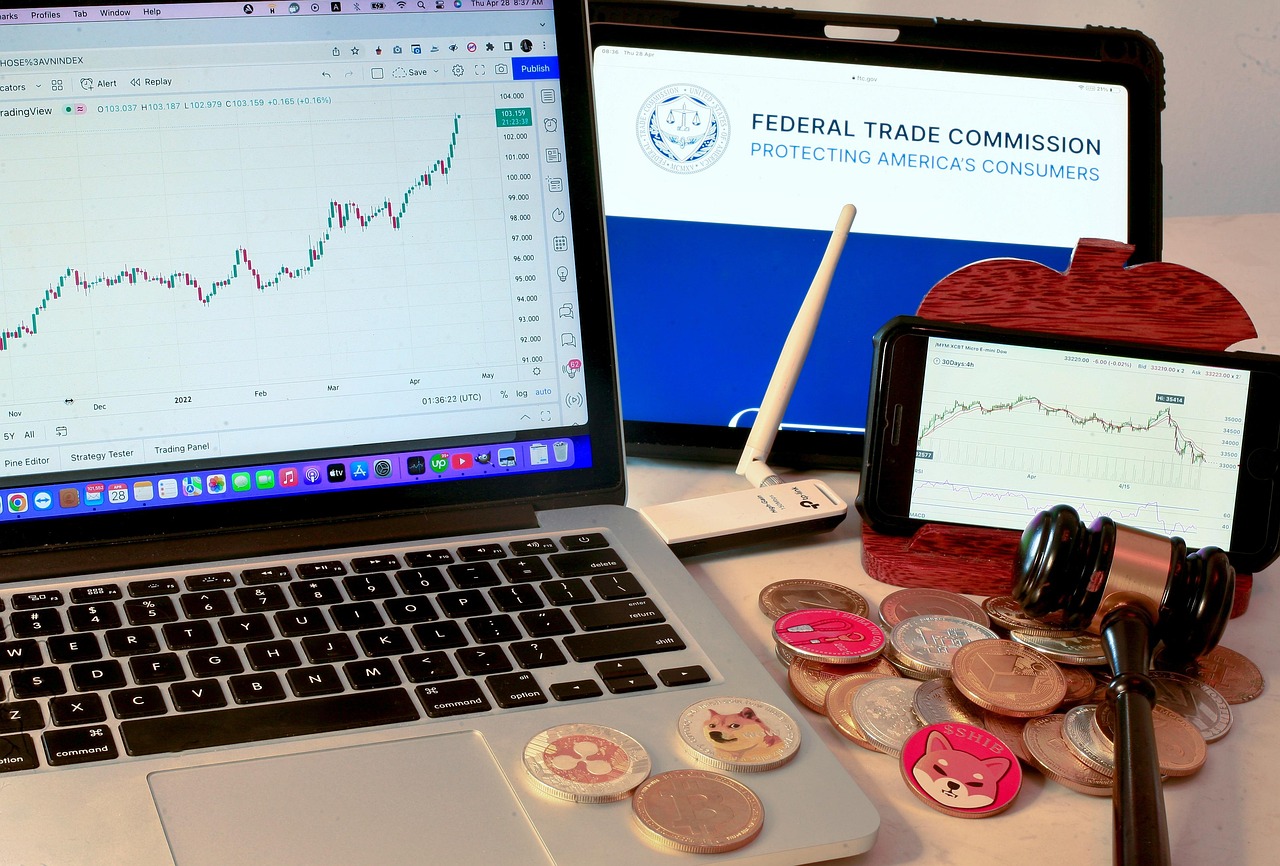
Congress didn’t set out to redesign money with the Digital Asset Market Clarity Act. Yet that is where the debate has now landed. The bill—intended to end regulation‑by‑enforcement and draw a workable line between SEC and CFTC authority—has stalled because stablecoins force a choice the status quo would rather avoid. Are digital dollars going to be corralled into a bank‑shaped box, or will they remain programmable cash that pressures incumbents to compete on yield, speed, and service? Everything else is downstream of that decision.

Banks, Stablecoins and the Need for Real Competition

Stablecoins have become the functional rails of crypto today—payment instruments, settlement media, and trading collateral—sometimes accompanied by yields from lending, reserve income, or activity‑based rewards. Banks see this as deposit‑like remuneration without bank‑level prudential rules. And they warn of deposit flight and regulatory arbitrage.

Senate negotiators have responded with draft provisions that limit “interest for simply holding a stablecoin,” while permitting some incentives tied to real activity (e.g., payments volume). Crypto firms counter that this approach smuggles the legacy model back in: if a fully reserved, transparent stablecoin can’t share its economics with users or experiment with market incentives, what exactly is the innovation? And if tokenized assets are pushed back into broker‑dealer rails, how meaningful is on‑chain finance?

This is not a sterile policy scuffle. It’s a market‑structure fork. Treat stablecoins like quasi‑deposits with minimal yield and centralized chokepoints, and you’ll get the same existing incumbent-protection and innovation-fenced banking channels. Treat them as programmable, interoperable dollars with risk‑appropriate guardrails, and you’ll get competition—on rates, UX, interoperability, and transparency.

Base—Coinbase’s Layer2 Network

Meanwhile, the market is already revealing the tradeoffs. Consider Base—Coinbase’s Layer‑2 on Ethereum’s OP Stack. It solves real problems: cheaper transactions, faster confirmation, and effortless ramps. It is the rare bridge from Web2 familiarity to Web3 innovation, powered by the distribution of an innovative public company. A very successful project so far indeed.

But Base also shows how “Web3‑branded” platforms can quietly recreate Web2 chokepoints. Today, a single sequencer—run by Coinbase—controls transaction ordering, inclusion, and liveness. Users can self‑custody, yet the network’s heartbeat depends on one operator.

At the asset layer, USDC, a stablecoin co‑created by Coinbase and Circle, is the default settlement currency. This is unsurprising given reserve‑yield economics and compliance benefits. While other tokens can technically be used on Base, the user experience strongly privileges USDC, shaping behavior through design rather than choice. None of this makes Base malign; it makes Base effective. But it also makes it an ecosystem managed by corporate incentives rather than a neutral public protocol.

The Bitcoin and Nostr Lesson: Protocols as Antidotes to Chokepoints

Here’s where Bitcoin and Nostr matter as living proof that open protocols can scale human coordination without reintroducing gatekeepers.

Bitcoin is bearer money with credible neutrality. There is no issuer to lean on, no off‑chain promise to redeem, no corporate switch to flip. With Lightning, small payments settle in native BTC without bridges or custodial wrapping. That architecture prevents a single firm from deciding who transacts, in what order, or at what fee. It’s not frictionless; liquidity management and UX remain hard. But Bitcoin/Lightning delivers something corporate L2s cannot promise: a censorship‑resistant exit option. When “Web3‑branded” stacks drift toward walled gardens, the mere availability of a neutral settlement layer disciplines behavior—users and developers can route around control points.

Nostr offers the same lesson for communications. It is a simple, open event protocol for publishing and relaying messages. There are no accounts to seize, no central servers to pressure, and no mandatory app store chokepoints. Anyone can run a relay, anyone can build a client, and identities travel with the user, not the platform. Like Bitcoin, Nostr isn’t perfect: spam resistance, moderation norms, and discovery are hard. But its permissionless interoperability and portable identity prevent the quiet re‑centralization that Web2 perfected and “Web3‑branded” platforms sometimes emulate. In practice, Nostr and Lightning together show how value and speech can move across a network where the rules are baked into open code rather than corporate policy.

The point isn’t to crown Bitcoin and Nostr as universal solutions (although we think highly of them): It’s to recognize their governance properties—credible neutrality, forkability, non‑discriminatory access—as the antidote to the chokepoints corporate platforms tend to recreate nowadays.

How Corporate L2s Can Earn Trust—and Avoid Antitrust Trouble

The solution isn’t to reject polished, easy‑to‑use platforms. It’s to make sure that as these networks grow, they don’t quietly become new chokepoints. Base—and any corporate‑run Layer‑2—could earn long‑term trust by committing to three simple principles:

Decentralize the Infrastructure

Right now, Base relies on a single sequencer. To avoid becoming a gatekeeper, it should eventually open this role to many independent operators. That means multiple entities helping order transactions, clear rules preventing any one party from dominating, and technical safeguards so users can always get their transactions included—or withdraw to Ethereum—if something goes wrong.

Neutralize the Asset Layer

If the network defaults to USDC everywhere, people will naturally end up using it—even if they’d prefer something else. Base could avoid that by offering a neutral asset picker and allowing different stablecoins, ETH, and even non‑custodial Bitcoin payment paths, to truly compete on equal footing. It should also separate any reserve income from network decisions and make switching between assets or providers easy and low‑cost.

Build Fair, Transparent Governance

To avoid ever looking like a walled garden, Base could give more groups a seat at the table, such as developers, users, and independent voices. Clear rules against self‑preferencing, public audits, transparent fee policies, and easy data portability, all would make the ecosystem more antitrust friendly.

These three steps aren’t just good crypto hygiene. They are antitrust risk reducers. The legal vulnerability for a dominant exchange‑wallet‑L2 bundle is the appearance of leveraging distribution power to foreclose rivals—by steering order flow, setting biased defaults, or discriminating in access. Open sequencers, neutral defaults, and documented non‑discrimination would make Base look less like a vertically integrated gatekeeper and more like neutral infrastructure.

What Congress Should Do

Policy should reflect the same principles.

Continue reading →

Amazon-Germany-300x134

Author: Luis Blanquez

On 5 February 2026, Germany’s competition authority, the Bundeskartellamt, announced a landmark ruling prohibiting Amazon from continuing practices that influenced how independent sellers priced their products on the German Amazon Marketplace. The authority also ordered Amazon to disgorge €59 million in economic benefits that it determined were gained through these anticompetitive practices.

At the center of the ruling lies Amazon’s dual role in Germany’s online retail ecosystem. As in the United States, the company not only sells products through its own retail arm, Amazon Retail, but also operates the Amazon Marketplace, a platform where independent third‑party sellers list and sell goods directly to consumers. About 60% of all items sold on Amazon.de come from these independent sellers, who bear full responsibility for setting prices and managing the financial risks of their businesses.

The Bundeskartellamt concluded that Amazon used a variety of “price control mechanisms” to review whether sellers’ prices were “too high.” When Amazon’s systems flagged a price as unacceptable, the company responded by either fully removing the listing from the platform or excluding the offer from the Buy Box—the prominent purchasing option that strongly influences sales volume. These measures can severely limit a seller’s visibility and revenue.

According to the authority, this system created a significant competitive imbalance. President Andreas Mundt emphasized that Amazon directly competes with the very sellers who rely on its platform. When a dominant marketplace operator can restrict or manipulate competitor pricing—even indirectly through algorithmic controls—it risks shaping the entire price landscape according to its own commercial interests. Mundt warned that such interference could prevent sellers from covering their costs, potentially pushing them off the marketplace entirely.

The Bundeskartellamt made clear that it does not object to Amazon’s ambition to offer low prices to consumers. Instead, the issue lies in how Amazon has attempted to achieve that goal. Regulators argue that Amazon can provide competitive prices without directly constraining the pricing choices of independent sellers. To address the issue, the authority has restricted Amazon from using price control tools except under narrowly defined circumstances—particularly cases of excessive or exploitative pricing—and only in compliance with detailed requirements that the Bundeskartellamt has now established.

The regulator highlighted the implications of Amazon’s market position. Amazon accounts for roughly 60% of Germany’s online goods retail market, making it an undeniably influential digital gatekeeper. Because independent sellers depend heavily on Amazon’s infrastructure and visibility, any internal policy that affects pricing can have sweeping economic impact. The authority asserts that Amazon’s previous practices allowed it to act as both a competitor and an arbiter of acceptable pricing behaviors, creating a structural conflict of interest.

By limiting Amazon’s ability to use these mechanisms, the Bundeskartellamt aims to restore pricing freedom to third‑party sellers and safeguard the competitive process. The decision stresses the need to prevent dominant digital platforms from exploiting their market position by embedding competitive advantages into the algorithms and systems that govern visibility, listing status, and price acceptability. According to the authority, this type of intervention is crucial to ensuring that Amazon cannot extend its competitive power on the marketplace into the broader retail economy.

Continue reading →

Elon-Musk-Tic-Toc-Antitrust-300x169

Authors: Pat Pascarella and Aaron Gott

The idea of Elon Musk purchasing TikTok might sound like a headline ripped from a speculative business column, and maybe it is. But as antitrust lawyers, we couldn’t resist. Obviously, Mr. Musk already owns X, and any such acquisition might raise antitrust concerns.

But could you head off those concerns by structuring the deal with an exception to the antitrust laws known as a Joint Operating Agreement? While JOAs were related to the newspaper industry and are largely seen as a relic of the past, their principles could provide a framework for addressing modern concerns.

A Brief History of Joint Operating Agreements

Joint Operating Agreements emerged during the 20th century as a mechanism to save failing newspapers thereby maintaining at least some level of editorial competition. By the mid-20th century, many U.S. cities had two major newspapers, but declining revenues and readership often left one teetering on the edge of closure. To prevent monopolization of the news market, Congress enacted the Newspaper Preservation Act of 1970, which allowed competing newspapers to enter into JOAs.

Under a JOA the two newspapers would be permitted to merge their business operations, so long as they agreed to maintain separate editorial teams. The goal was to preserve journalistic diversity in cities that were about to find themselves with only one surviving paper. But JOAs required approval from the Department of Justice (DOJ) and were contingent on demonstrating that one of the newspapers was “failing.”

JOA Requirements

For a JOA to be approved, the following conditions had to be met:

  1. Failing Firm Doctrine: One of the parties had to demonstrate that it was financially unsustainable and would likely exit the market absent the agreement.
  2. No less anticompetitive alternative: There must not be a less anticompetitive alternative to the joint operation agreement.
  3. Preservation of Competition: The agreement had to preserve a degree of competition, particularly in areas such as content creation or editorial independence.
  4. DOJ Oversight: The DOJ maintained the authority to review and approve any proposed JOAs, ensuring they aligned with antitrust laws.

Applying the JOA Framework to a Musk-TikTok Deal

Elon Musk’s ownership of X likely would raise antitrust concerns about the acquisition of TikTok. But a JOA (or JOA.2) could provide a creative solution to balance these concerns with broader policy objectives, such as ensuring competition with other tech giants like Meta and Alphabet while also addressing national security issues tied to TikTok’s current Chinese ownership.

A critical hurdle, however, would be demonstrating that TikTok meets the “failing firm” criterion. While TikTok is far from failing financially, isn’t “failing” simply another term for “about to involuntarily exit the market.”  Same outcome, hence same justification.

But this difference could mean a crucial difference under the JOA legal framework. As explained above, there must be no less anticompetitive alternative available. When it came to the failing newspapers, there was no alternative: failing newspapers did not have buyers lining up to buy them. But popular social media platforms do.

But there’s an answer here as well.  One idiosyncrasy of the TikTok situation is that the Chinese government has taken the position that the TikTok algorithm is a Chinese national security secret. So any sale of TikTok means, as a practical matter, that it is not likely to come with a functioning algorithm. This limits the potential pool of buyers to those who either have one they can adapt or who can put one together on the fly.

This likely narrows significantly the existing pool of willing buyers to those who already have social media companies, or possibly even to those people who are known to drive their teams to accomplish skunkworks-like missions on impossible timelines.

Political and Regulatory Considerations

Continue reading →

Amazon-FTC-Lawsuit-Online-Shopping-300x169

Author: Sabri Siraj

The Federal Trade Commission has survived a motion to dismiss in a high-stakes lawsuit against Amazon, igniting critical discussions about competition in the online marketplace. As a dominant player in global e-commerce, Amazon’s practices have long affected both consumers and competitors. Will this case change those practices or otherwise have implications for online marketplaces?

Important Note

Bona Law is currently representing Zulily in a similar lawsuit against Amazon in federal district court. You can read the complaint here.

About the Case

The FTC’s lawsuit, filed in Washington State federal court, stems from allegations that Amazon engages in anticompetitive practices that inhibit competition and violate the Sherman Act, the FTC Act, and consumer protection laws. The FTC alleges Amazon pricing practices harm competition by limiting consumer choices, and that Amazon engages in coercive tactics that disadvantage third-party sellers, creates barriers for new entrants, overcharges sellers, and makes it more expensive for sellers to offer their products on other platforms. Numerous states have joined the FTC’s lawsuit.

Amazon denies the allegations and asserts that its practices benefit consumers and competition. The court dismissed some state law claims but has otherwise allowed the lawsuit to proceed, with trial scheduled for October 2026.

Will the Case Affect Amazon’s Competitors?

For Amazon’s existing competitors, the FTC’s actions could provide both opportunities and challenges. If the lawsuit successfully restricts Amazon’s anti-competitive practices, it may level the playing field for other marketplaces like Walmart, eBay, and Shopify. These companies have often struggled to compete with Amazon’s extensive resources, alleged anticompetitive conduct, and customer loyalty programs. A more dynamic marketplace could enable them to attract more sellers and consumers, driving innovation and diversity in e-commerce offerings.

Moreover, if Amazon’s pricing strategies are curtailed, consumers could benefit through lower prices and improved service from competitors. This could encourage a competitive environment where companies strive to enhance their offerings, benefiting consumers.

Continue reading →

AI-Antitrust-Mergers-300x240

Author: Luis Blanquez

Two of the main pillars from the Biden Administration Antitrust Policy in 2023 have been an aggressive merger enforcement agenda and its crusade against Big Tech and vertical integration.

On the merger side, the Department of Justice (DOJ) and Federal Trade Commission (FTC) have published new Merger Guidelines (see also here) and proposed new changes to Hart-Scott-Rodino Act (HSR) notification requirements (see also here.) In addition, both antitrust agencies have challenged more mergers in 2022 and 2023 than ever before. In a letter from November 2023 responding to questions from Rep. Tom Tiffany, R-Wis., FTC Chair Lina Khan stressed the fact that:

“a complete assessment of the FTC’s success in stopping harmful mergers reveals that of the 38 mergers challenged during my tenure as Chair, 19 were abandoned, another 14 were settled with divestitures, and two are pending a final outcome.”

This includes key acquisitions such as the Nvidia/Arm Ltd or Meta/Within, among many others. And the FTC is showing no signs of slowing down this aggressive approach. Another recent example of a merger challenge by the DOJ is the Live Nation/Ticketmaster’s complaint.

But despite the FTC’s Chair confidence and the recent new challenge by the DOJ, this hasn’t been an easy path for the antitrust enforcers. Courts in the US have pushed back several of the agencies’ extreme challenges and new theories, such as in the Microsoft/Activision, (see also here, here, and here.)

On the Big Tech front things do not look much better. Both agencies have filed major illegal monopolization cases, sometimes together with State AGs, against Apple (Smartphones), Google (Google Search and Google Ad Technology), Amazon (Online Retail), and Meta (Instagram/WhatsApp––see also here––, and Within acquisitions.)

In other words, if you work in Big Tech, forget about acquiring an AI startup, unless you want to go through a long and hostile review process. This is having a serious impact on the most disruptive and growing industry we’ve seen in years.

The “Magnificent Seven” Tech Companies

The ascendency of Apple, Microsoft, Nvidia, Tesla, Meta, Alphabet and Amazon, the so-called “Magnificent Seven” tech stocks––is indicative of “a fundamental shift”, primarily propelled by advancements in AI. Currently, the top seven tech stocks have not only accounted for about half of the gains in the entire S&P 500, but also contributed to over a quarter of the index’s total market capitalization. These companies are not merely riding the wave of current technologies but actively shaping the future of AI. They collectively gather most of the market cap in the industry.

But until we see a shift on the current enforcers’ antitrust policy against acquisitions involving Big Tech, it doesn’t matter how well these companies perform. Why? Because as a startup in the tech industry (and really in any industry), your main goal is to either try to eventually go public through an IPO––if you become big enough––, or rather look for one of the Big Tech companies to acquire you. But with the antitrust agencies’ current appetite to block such transactions, Venture Capital companies and investors in the AI industry are thinking twice before risking their money on a startup, unless they specifically know that company is going public. Otherwise, the risk that VCs and investors see to get the deal blocked by either the FTC or DOJ is just too high, regardless of the potential these startups might have. And let’s be honest, the number of companies that make it to that level is already extremely low.

First, this is clear evidence of how such an aggressive and disproportionate approach to acquisitions involving Big Tech is currently hindering innovation in the most relevant and disruptive industry we’ve seen in years. But this is a topic for another article.

Second, what I want to discuss in this article is how because of such an extreme approach from the Biden Administration, Big Tech are starting to develop new and creative strategies to get involved in the AI industry, without having to acquire any startups and face the antitrust agencies. At least not until now, because this has already raised some eyebrows at both the DOJ and FTC.

Microsoft/Inflection

The first of these deals involves Microsoft and Inflection.

Backed by Microsoft, Nvidia and billionaires Reid Hoffman, Bill Gates and Eric Schmidt; ex-DeepMind leader Mustafa Suleyman––now Google’s main AI lab, and Reid Hoffman, who co-founded LinkedIn, started Inflection in 2022, claiming to have the world’s best AI hardware setup.

Inflection thesis was based on AI systems that can engage in open-ended dialogue, answer questions and assist with a variety of tasks. Named Pi for “personal intelligence,” Inflection’s first release helped users talk through questions or problems over back-and-forth dialog it then remembers, seemingly getting to know its user over time. While it can give fact-based answers, it’s more personal and “human” than any other chatbot.

In March of this year, Microsoft announced the payment of $650 million to inflection. $620 million for non-exclusive licensing fees for the technology (meaning Inflection is free to license it elsewhere) and $30 million for Inflection to agree not to sue over Microsoft’s poaching, which includes co-founders Mustafa Suleyman and Karén Simonyan. Suleyman will run Microsoft’s newly formed consumer AI unit, called Microsoft AI–– a new division at Microsoft that will bring together their consumer AI efforts, as well as Copilot, Bing and Edge––, whereas Simonyan is joining the company as a chief scientist in the same new group. Inflection will host Inflection-2.5 on Microsoft Azure. It will be also pivoting away from building the personalized AI chatbot Pi to become an AI studio helping other companies work with large language model AI.

So here is where it gets interesting. Microsoft didn’t formally need to make an offer to acquire Inflection. In other words, technically Inflection remains an independent company. But the antitrust agencies seem to disagree and have started asking themselves the following questions.

First, if the key people, money and technology have all left the company to go to Microsoft, what’s really left in Inflection to still be considered as a competitor in the market?

Second, could this qualify as a change in control according to 16 C.F.R. §801.1(b)? What about a file-able acquisition of just “assets”––a term currently undefined by the HSR statute and regulations?

And third, does this move create a “reverse acqui-hire” transaction, a practice which is becoming very popular in the AI industry? The so-called “acqui-hires,” are transactions in which one company acquires another with the main purpose to absorb key talent. But what’s going on in the AI industry is not quite the same. Big Tech are acquiring key employees––such as Suleyman and Simonyan with their core teams in this case––, while licensing technology, leaving the targeted company still functioning independently––so no HSR filing requirement is apparently triggered. This is not the first time we’ve seen this scenario in the AI industry. Last month, Amazon poached Adept’s CEO and key employees, while getting a license to Adept’s AI systems and datasets.

But the antitrust enforcers have started to ask themselves whether Inflection and Adept are still real competitors in the AI market. The FTC has already sent subpoenas to both parties in the Microsoft/Inflection transaction, asking for information about a potential gun-jumping scenario: whether the $650 million deal may qualify as an informal acquisition requiring previous government approval. In the case of Amazon/Adept, the FTC has also decided to start an investigation and asked for more information.

OpenAI, Nvidia and Microsoft

The FTC and DOJ are finalizing an agreement to split duties to investigate potential antitrust violations of Microsoft, OpenAI, and Nvidia.

According to Politico, the DOJ will lead the Nvidia investigation, and its leading position in supplying the high-end semiconductors underpinning AI computing, while the FTC is set to probe whether Microsoft, and its partner OpenAI, have unfair advantages with the rapidly evolving technology, particularly around the technology used for large language models. At issue is the so-called AI stack, which includes high-performance semiconductors, massive cloud computing resources, data for training large language models, the software needed to integrate those components and consumer-facing applications like ChatGPT.

Continue reading →

Apple-Store-Antitrust-and-Competition-EU-and-US-300x225

Author: Luis Blanquez

Apple is currently feeling the heat from antitrust authorities all over the world. Probably more than ever. Below is an article we recently published in the Daily Journal discussing in some detail the last developments in the Epic Games saga, both in the EU and the US.

Epic Games Has Returned to the Apple Store. Will Apple Throw a Hail Mary?

If you are a developer in the Web3 space trying to access the Apple Store, you should also review this article:

Antitrust, Web3 and Blockchain Technology: A Quick Look into the Refusal to Deal Theory as Exclusionary Conduct

So, what’s on Apple’s plate in the antitrust world on both sides of the pond?

In the European Union, the European Commission has fined Apple over €1.8 billion for abusing its dominant position on the market for the distribution of music streaming apps to iPhone and iPad users (‘iOS users’) through its App Store. The Commission found that Apple applied restrictions on app developers preventing them from informing iOS users about alternative and cheaper music subscription services available outside of the app. Such anti-steering provisions ban app developers from the following:

  • Informing iOS users within their apps about the prices of subscription offers available on the internet outside of the app.
  • Informing iOS users within their apps about the price differences between in-app subscriptions sold through Apple’s in-app purchase mechanism and those available elsewhere.
  • Including links in their apps leading iOS users to the app developer’s website on which alternative subscriptions can be bought. App developers were also prevented from contacting their own newly acquired users, for instance by email, to inform them about alternative pricing options after they set up an account.

At the same time, the European Commission has just opened a non-compliance investigation under the new Digital Markets Act about Apple’s rules on (i) steering in the App Store; (ii) its new fee structure for alternative app stores; and (iii) Apple’s compliance with user choice obligations––to easily uninstall any software applications on iOS, change default settings on iOS and prompt users with choice screens which must effectively and easily allow them to select an alternative default service.

Meanwhile, antitrust enforcement is also heating up for the Cupertino company in the United States.

Besides several private litigation actions, Epic Games recently filed a motion accusing Apple of violating an order issued last year under California law barring anti-steering rules in the App Store.

And just few days ago, the Justice Department, joined by 16 other state and district attorneys general, filed a civil antitrust lawsuit against Apple for monopolization or attempted monopolization of smartphone markets in violation of Section 2 of the Sherman Act. According to the complaint, Apple has monopoly power in the smartphone and performance smartphones markets, and it uses its control over the iPhone to engage in a broad, sustained, and illegal course of conduct. The complaint alleges that Apple’s anticompetitive course of conduct has taken several forms, many of which continue to evolve today, including:

  • Blocking Innovative Super Apps.Apple has disrupted the growth of apps with broad functionality that would make it easier for consumers to switch between competing smartphone platforms.
  • Suppressing Mobile Cloud Streaming Services. Apple has blocked the development of cloud-streaming apps and services that would allow consumers to enjoy high-quality video games and other cloud-based applications without having to pay for expensive smartphone hardware.
  • Excluding Cross-Platform Messaging Apps. Apple has made the quality of cross-platform messaging worse, less innovative, and less secure for users so that its customers have to keep buying iPhones.
  • Diminishing the Functionality of Non-Apple Smartwatches. Apple has limited the functionality of third-party smartwatches so that users who purchase the Apple Watch face substantial out-of-pocket costs if they do not keep buying iPhones.
  • Limiting Third Party Digital Wallets. Apple has prevented third-party apps from offering tap-to-pay functionality, inhibiting the creation of cross-platform third-party digital wallets.

The complaint also alleges that Apple’s conduct extends beyond these examples, affecting web browsers, video communication, news subscriptions, entertainment, automotive services, advertising, location services, and more.

Continue reading →

Microsoft-Activision-FTC-Antitrust-300x159

Authors: Steve Cernak and  Luis Blanquez

This week a federal judge in California denied a preliminary injunction to block Microsoft’s $68.7 billion merger with Activision Blizzard Inc. Both parties may now move ahead and close the deal––subject to further clearance in the UK and Canada––before the July 18 contractual deadline. The FTC has decided to appeal the Court order. We do not yet know the grounds for the appeal but the Court hammered hard almost every single argument from the agency.

The Order includes a detailed background of this case. In a nutshell, the FTC alleges in its complaint that Xbox-maker Microsoft would be incentivized to block Sony PlayStation access to crucial Activision games, especially the very popular Call of Duty game. Below we discuss the main three key antitrust issues involved.

Market Definition

If any, this might be the only partial victory for the FTC in this case.

The Judge states in the Opinion that at this stage of the litigation the FTC need only make a “tenable showing” and she must accept the market definition proposed by the FTC: The Gen 9 consoles market––with Microsoft’s Xbox and Sony’s PlayStation as the only competitors. But at the same time, she did not shy away from highlighting her doubt about the FTC’s market definition surviving a full-blown court review and that she would likely also include Nintendo’s Switch. Why? Because despite its content and functional differences with the Xbox and PlayStation, the FTC failed to consider whether its price, portability, and battery are factors the customer balances when deciding which console to purchase, and because many of the most popular Activision games are available on the three consoles.

As to the FTC’s additional proposed markets of the multigame content library subscription services and cloud gaming, the Court assumed––without deciding––they were each their own product market.

This is as good as it gets for the FTC in this Opinion.

The Clayton Act Requires Competition to be Harmed Substantially, Which is a Higher Standard

A vertical merger involves companies at different levels of the supply chain and are usually less problematic from an antitrust point of view. That’s why for almost fifty years neither the FTC nor the DOJ rarely challenged them. But that has recently changed under the Biden administration and the new head of the FTC Lina M. Khan.

Indeed, this case is the third recent challenge to a vertical merger. The other two were the Illumina’s acquisition of Grail (currently on appeal to the Fifth Circuit; Bona Law filed an amicus brief supporting Illumina’s position) and the Meta-Within transaction. The latter was another unsuccessful attempt by this FTC to block a vertical merger.

All of these challenges have one thing in common: the FTC’s aggressive stretching of the Clayton Act’s coverage. And this last case is no different. Here the District Court–– citing the well-known AT&T acquisition of TimeWarner in 2018 (See United States v. AT&T, 310 F. Supp. 3d 161, 189–92 (D.D.C. 2018) states that:

“[T]he outcome “turn[s] on whether, notwithstanding the proposed merger’s conceded procompetitive effects, the [g]overnment has met its burden of establishing, through ‘case-specific evidence,’ that the merger of [Microsoft] and [Activision], at this time and in this remarkably dynamic industry, is likely to substantially lessen competition in the manner it predicts.” See AT&T, 916 F.3d at 1037.

In the Court’s own words: “it is not enough that a merger might lessen competition—the FTC must show the merger will probably substantially lessen competition. That the combined firm has more of an incentive than an independent Activision says nothing about whether the combination will “substantially” lessen competition. See UnitedHealth Grp., 630 F. Supp. 3d at 133 (“By requiring that [the defendant] prove that the divestiture would preserve exactly the same level of competition that existed before the merger, the Government’s proposed standard would effectively erase the word ‘substantially’ from Section 7”).

Thus, like the ALJ in the Illumina case, and the District Court in the AT&T case, Judge Scott Corley once again finds in this case that the FTC did not show anything more than a “mere possibility” of substantial lessening of competition. This is not the right legal test as we have stated in a recent amicus brief in the Illumina case.

Ability and Incentive: Both Necessary to Show a Foreclosure Theory

One of the keystones of the antitrust policy under the Biden-administration has been to challenge previous case law on how to block problematic transactions, both horizontal and vertical. But so far, the agency has not been particularly successful.

Again, in the Court’s own words:

“As a threshold matter, the FTC contends it need only show the transaction is “likely to increase the ability and/or incentive of the merged firm to foreclose rivals.” [ ] For support, it cites its own March 2023 decision in Illumina, 2023 WL 2823393, at *33. The FTC in Illumina reasons:

[t]o harm competition, a merger need only create or augment either the combined firm’s ability or its incentive to harm competition. It need not do both. Requiring a plaintiff to show an increase to both the ability and the incentive to foreclose would per se exempt from the Clayton Act’s purview any transaction that involves the acquisition of a monopoly provider of inputs to adjacent markets. 2023 WL 2823393, at *38 (cleaned up) (emphasis added).

The FTC in Illumina, however, provides no authority for this proposition, nor could it. Under Section 7, the government must show a “reasonable probability of anticompetitive effect.” Warner, 742 F.2d at 1160 (emphasis added). If there is no incentive to foreclose, then there is no probability of foreclosure and the alleged concomitant anticompetitive effect. Likewise, if there is no ability, then a party’s incentive to foreclose is irrelevant.”

Judge Scott Corley makes clear in her Order that to establish a likelihood of success on the merits for a foreclosure theory in this case, the FTC must show that the combined firm (1) has the ability to withhold Call of Duty, (2) has the incentive to withhold Call of Duty from its rivals, and (3) competition would probably be substantially lessened as a result of the withholding.

The Court held that while Microsoft may have the ability to foreclose competition because it would own the Call of Duty franchise, it has no incentive to do so. The Judge supports her conclusion on the fact that: (i) immediately upon the merger’s announcement, Microsoft committed to maintain Call of Duty on its existing platforms and even expand its availability, entering a new agreement to extend Activision’s obligation to ship Call of Duty at parity on PlayStation, (ii) sent Valve a signed letter agreement committing to make Call of Duty available on Steam for ten years, and (iii) expanded Call of Duty to non-Microsoft platforms, bringing Call of Duty to Nintendo’s Switch.

In addition, the Judge noticed that the deal plan evaluation model presented to the Microsoft Board of Directors to justify the Activision purchase price (iv) relied on PlayStation sales and other non-Microsoft platforms post-acquisition, and (v) reflected access to mobile content as a critical factor in favor of the deal.

The Court further concluded that (vi) Microsoft’s witnesses’ testimony consistently confirmed the lack of Microsoft’s plans to make Call of Duty exclusive to Xbox, (vii) Call of Duty’s cross-platform play was critical to its financial success, and (viii) agreed with Microsoft’s arguments anticipating irreparable reputational harm in case of foreclosing Call of Duty from PlayStation.

The judge reached the same conclusion on the likelihood of Microsoft blocking access through online subscription services. As for cloud gaming, the Court was also persuaded by Microsoft’s recent agreements with five cloud-streaming providers to freely license Activision games––including Call of Duty––for ten years, a key factor for the European Commission to also clear the transaction in the EU few months ago.

Following this ruling, Microsoft and UK antitrust officials have agreed to suspend litigation and focus on trying to reach an agreement on how the acquisition might be modified to address any competition concerns.

Supreme Court Case Law Obligates Merger Challenges to Address the Deal and Certain Proposed Fixes

The FTC desperately tried to also show that Microsoft’s binding offer was just a “proposed remedy” that may not be considered until the remedy phase, after a Section 7 liability finding.

As support, it relies on its own 2023 Illumina decision and E.I. du Pont, 366 U.S. But once again the Court disagrees with the FTC:

E.I. du Pont does not support the Commission’s holding. It involved a remedy proposed after a finding of a Section 7 violation. The Court held: “once the Government has successfully borne the considerable burden of establishing a violation of law, all doubts as to the remedy are to be resolved in its favor.” E.I. du Pont, 366 U.S. at 334. E.I. du Pont says nothing about whether the merger-challenging plaintiff must address offered and executed agreements made before any liability trial, let alone liability finding; that is, whether the FTC must address the circumstances surrounding the merger as they actually exist.” This same point is key to the Illumina appeal currently pending in the Fifth Circuit.

Continue reading →

Blockchain-and-refusal-to-deal-antitrust-225x300

Author: Luis Blanquez

A company using a blockchain––or perhaps even the blockchain itself––, with a sizeable share of a market, could be a monopolist subject to U.S. antitrust laws. But monopoly by itself isn’t illegal. Rather, a company must use its monopoly power to willfully maintain that power through anticompetitive exclusionary conduct.

Thus, a monopolization claim requires: (i) the possession of monopoly power in the relevant market––i.e. the ability to control output or raise prices profitability above those that would be charged in a competitive market; and (ii) the willful acquisition or maintenance of that power as distinguished from attaining it by having a superior product, business acumen, or even an accident of history. United States v. Grinnell Corp., 384 U.S. 563, 570-71 (1966).

The monopolist may also have a legitimate business justification for behaving in a way that prevents other firms from succeeding in the marketplace. For instance, the monopolist may be competing on the merits in a way that benefits consumers through greater efficiency or a unique set of products or services.

There are many ways a company may willfully acquire or maintain such monopoly power through anticompetitive exclusionary conduct. Some of them include exclusive supply or purchase agreements, tying, bundling, predatory pricing, or refusal to deal.

In this article we briefly discuss the refusal to deal theory of harm in the context of web3.

What is Web3?

The internet is an evolving creature. Thirty years ago, web 1.0 was all about browsing and reading information. As a consumer you had access to information, but few were able to publish online.

In the early 2000s the current web 2.0. arrived, and everyone started publishing their own web content and building communities. The problem today is that we have a centralized internet. Very few companies––big online platforms such as Google, Facebook or Amazon––control and own everyone’s online content and data. And they even use all that data to make money through, for instance, targeted advertising.

That’s why web3 is a necessary step in the right direction. As a consumer you can now access the internet without having to provide your personal data to these online gatekeepers. And you don’t need to give up ownership of the content you provide. Plus, you own your digital content and can execute digital agreements using crypto currencies. If wonder how is all that possible, the answer is through a new infrastructure called blockchain.

You can read a broader discussion of antitrust guidelines for companies using blockchain technology here.

Refusal to Deal with Competitors or Customers

Competitors and Rivals

First, an illegal refusal to deal may occur when the monopolist refuses to deal with a competitor or rival. Under US antitrust laws such claims are challenging and rarely successful.

Although a company generally has no duty to deal with its rivals, courts have found antitrust liability in some limited scenarios when a monopolist (i) unilaterally outright refuses to sell a product to a rival that it made available to others (Verizon Commc’ns, Inc. v. Law Offs. of Curtis V. Trinko, LLP, 540 U.S. 398, 407–09 (2004), see also Aspen Skiing, 472 U.S. at 601; Otter Tail Power Co. v. United States, 410 U.S. 366, 377-78 (1973); OR (ii) had a prior voluntary and presumably profitable course of dealing with a competitor, but then terminated the relationship, giving up short-term profit from it in order to achieve an anticompetitive end. See Pac. Bell Tel. Co. v. linkLine Commc’ns, 555 U.S. 438, 442, 451 (2009), Novell, Inc. v. Microsoft Corp., 731 F.3d 1064 (10th Cir. 2013), cert. denied, 572 U.S. 1096 (2014).

Applied to the web3 world, this means that the validators of a blockchain could face antitrust scrutiny only if they had monopoly power, and (i) they previously allowed a competitor access to its blockchain but later agreed to exclude that rival, or (ii) sacrifice short-term profits without a reasonable business justification. This is, of course, unlikely considering the decentralized structure of blockchains and their need for gas fees to keep validators’ business profitable and the chain secured. When the validators are decentralized, they are not a single economic entity for purposes of the antitrust laws. But the risk would still differ depending on the blockchain and the level of decentralization.

What we might eventually see, however, is a company with monopoly power using a blockchain to exclude its rivals from the market through different anticompetitive conduct. For instance, we might see restrictions to only use one blockchain, to use smart contracts to impose loyalty rebates and other barriers to switch between blockchains, conditioning the use of one blockchain for a specific application or product by restricting the use of other blockchain or non-blockchain rivals’ infrastructure, or to require suppliers upstream or end customers downstream, to use the same blockchain for different products or applications.

Customers

Second, a refusal to deal may also take place when a monopolist refuses to deal with its customers downstream or suppliers upstream. A monopolist’s refusal to deal with customers or suppliers is lawful so long as the refusal is not the product of an anticompetitive agreement with other firms or part of a predatory or exclusionary strategy. Note, however, that a monopolist cannot decline to deal with customers as retaliation for those customers’ dealings with a competitor. That is often called a refusal to supply and is in a different doctrinal category than a refusal to deal. But, beyond these anticompetitive exceptions, private companies are typically free to exercise their own independent discretion to determine with whom they want to do business.

This test is broader than the one for competitors and requires a case-by-case legal and economic analysis to determine whether anticompetitive conduct exists. And web3 is not any different in this respect.

The Apple App Store and web3

Let’s take the Apple App Store as an example.

In the web2 world, Apple has created a “walled garden” in which Apple plays a significant curating role. Developers can distribute their apps to iOS devices only through Apple’s App Store and after Apple has reviewed an app to ensure that it meets certain security, privacy, content, and reliability requirements. Developers are also required to use Apple’s in-app payment processor (IAP) for any purchases that occur within their apps. Subject to some exceptions, Apple collects a 30% commission on initial app purchases and subsequent in-app purchases.

There are currently several related ongoing antitrust investigations and litigations worldwide about Apple’s conduct with its App Store. In the U.S., the Court of Appeals from the Ninth Circuit on the Epic Games saga held that Apple should not be considered a monopolist in the distribution of iOS apps. But this ruling also came with a string attached. The judge concluded that Apple did violate California’s unfair competition law and could not maintain anti-steering rules preventing users from learning about alternate payment options. If you want to learn more (see here). Both companies have recently asked the Ninth Circuit for a rehearing and the stakes are high.

Companies in web3 are now starting to deal with similar potentially anticompetitive behavior from web2 big tech companies. Uniswap, StepN and Damus are just three of many recent examples.

Continue reading →

Antitrust-for-Kids-300x143

Author:  Molly Donovan

Gordon was recognized as dominant in the 5th grade class. He had the greatest share of friends and ran the fastest. He was the smartest and won the most academic awards at the end of each school year. He was always chosen as the lead in every school play.

But one day, Gordon’s teacher accused him of cheating. Rather than playing fair, Gordon had excluded a new student, Samuel, from the playground races at school. Samuel showed real promise in track and field and Gordon hated to admit that he felt a bit threatened. Although he knew it was wrong, Gordon wrote a number of notes to classmates telling them to exclude Samuel from all playground races. His teacher, of course, found one of those notes.

That was bad enough, but Gordon went and made everything worse. For use during an upcoming parent-teacher conference, Gordon’s teacher instructed him to collect and keep all the notes he had written to friends demanding that they refuse to race against Samuel. Instead, Gordon shredded the notes and threw away the scraps! Then—and this is the real clincher—Gordon told his teacher, falsely, that he had preserved the notes as instructed.

Obviously, this all came out at the conference. There, the teacher argued that Gordon should be punished for throwing away the notes and lying about their being preserved. Gordon argued that punishment was not necessary—his conduct was not that bad since at least half the notes were to friends who had nothing to do with the boycott of Samuel anyway.

As you might expect, Gordon’s parents agreed with the teacher. The result: Gordon had to give back a significant portion of his monthly allowance and donate it to the school, and further punishment—publicly unknown—would wait until Gordon got home.  Eeeek!

Could Gordon continue his dominance after all that? You’ll have to wait for a future Antitrust for Kids to find out.

Continue reading →

Meta-FTC-Merger-Antitrust-300x200

Authors: Steven Cernak and Luis Blanquez

Earlier in February 2023, the Court for the Northern District of California denied the FTC’s preliminary injunction motion to prevent the closing of Meta Platforms Inc.’s acquisition of Within Unlimited, Inc.––a virtual reality (VR) App developer. The FTC has declined to appeal the loss and has paused its administrative in-house challenge. Meta has now closed the transaction. Below we summarize the key points from the opinion and what we think are the two key takeaways for merger practitioners.

Opinion Summary

As with many contested mergers, a key legal battle in this case was market definition. The FTC proposed a relevant product market consisting of VR dedicated fitness apps, meaning VR apps “designed so users can exercise through a structured physical workout in a virtual setting.” The merging parties, on the other hand, alleged that the FTC’s proposed market definition was too narrow, excluding “scores of products, services, and apps” that are “reasonably interchangeable” with VR dedicated fitness apps, including VR apps categorized as “fitness” apps on Meta’s VR platform, fitness apps on gaming consoles and other VR platforms, and non-VR connected fitness products and services”. Extensively quoting Brown Show and that venerable opinion’s “practical indicia” of a market, the Court held that the FTC made a sufficient evidentiary showing of a well-defined submarket, consisting of VR dedicated fitness apps.

Having won that battle, the FTC argued that the proposed acquisition would violate Section 7 of the Clayton Act by substantially lessening competition in the market for VR dedicated fitness apps. According to the agency, even though Meta was not currently a competitor in the VR dedicated fitness app market, it was both (i) an actual potential competitor, and (ii) a perceived potential competitor in the relevant market. In the first theory, the FTC argued that the transaction harmed competition because Meta would have entered the market on its own. In the second theory, the FTC argued that Meta’s mere presence on the wings of the market before the transaction kept current participants from acting anticompetitively.

The court denied the FTC’s motion for preliminary injunction, finding that the facts did not support either potential competition theory. The court, however, did find that both theories remained good law and, therefore, are available for the FTC and DOJ to support violations of Section 7 of the Clayton Act in the future. Merger practitioners will need to learn, or remember, the necessary elements of these theories, including sufficient market concentration and the acquiring party having the necessary characteristics, capabilities, and economic incentive to enter the market.

Key Takeaway: Old Precedent Comes Back

Most merger practitioners have become used to working with the DOJ/FTC Horizontal Merger Guidelines (HMG) and the opinions that follow their reasoning, especially those from this century. For some practitioners with little to no grey hair, those precedents might be all they have ever known.  For example, the district court opinion in AT&T/TimeWarner in 2018 has multiple cites to H.J. Heinz from 2001, Arch Coal from 2004, and Baker Hughes from 1990.  Last year’s UnitedHealth/Change opinion cited all those same cases plus Anthem from 2017 and Sysco from 2015.  Sure, some older precedent always makes it into opinions and briefs — defendants often cite General Dynamics from 1974 and the government loves 1963’s Philadelphia National Bank — but those exceptions are few.

As the FTC has moved away from the 2010 HMGs but not yet replaced them, practitioners have questioned where to find guidance. If the briefs and opinion in this case are any clue, the answer might be court opinions from forty or more years ago.

For example, look at the cases cited in the potential competition sections of the opinion. Now, it is true that the Supreme Court cases that extensively discuss the theories, such as Marine Bancorp., date from the 1970’s. The district and appellate court cases relied on by the court in the section discussing the continued validity of the actual potential competition theory date from 1984, 1981, 1980, and 1974. The only more recent court opinion mentioned is the FTC’s loss in 2015’s Steris. The Court’s 1973 opinions in Falstaff Brewing gets extensive discussion in ten separate mentions. According to Lexis, that case involving Dizzy Dean’s favorite beer has only been cited twenty times since 2010.

Even when defining the product market, the court spends ten pages going through various indicia found in 1962’s Brown Shoe and only two pages on the hypothetical monopolist test found in the HMGs — and then only “[i]n the interests of thoroughness.” The cases cited in the Court’s legal analysis of product market definition include several from this century but also older ones like Twin City Sports Service (1982), Times Picayune (1953), and Continental Can (1964). So at least until any new Guidelines are issued, merger practitioners might need to spend more time honing arguments based on older cases and less time arguing the intricacies of the HMGs.

Key Takeaway: Competitive Pressure from Apple?

In discussing competition in the VR hardware and various software or app “markets,” the Court describes many different current competitors. While it is difficult to know for certain because of the extensive redactions, it appears that Apple applied extensive competitive pressure on Meta, either as another potential suitor for Within or a current or potential competitor in some VR-related market—or both.  Specifically, the judge says in his opinion that Meta was concerned that Apple might “lock in” fitness content (perhaps Within?) that would be exclusive to Apple’s expected VR hardware.

If so, these two Big Tech behemoths pressuring each other, especially in markets neither one dominates, is further support for some of the ideas expressed at least in Nicolas Petit’s Moligopoly Scenario.  Paraphrasing one of Petit’s points, these powerful companies might seem like monopolists, but they act more like oligopolists fearful of competitive pressure from other giants and others. In short, none of them wants to miss the next big thing and become the next Blockbuster to some future Netflix. This opinion seems to put considerable weight on contemporaneous documents from Meta and others that describe those types of strategic considerations driving Meta’s behavior. If future cases follow suit, merger practitioners might be able to focus more on well-supported boardroom considerations and less on hypothetical analyses from outside economic experts.

Continue reading →

Contact Information