Film-Participation-Agreements-Expert-300x200

Author: Steven Madoff

Steven Madoff is a former Executive Vice President at Paramount Pictures and General Counsel for its Home Entertainment Subsidiary. He is Of Counsel at Bona Law.

When you see someone acting strangely, do you ever wonder if they are possessed? If you do, it might be because of the everlasting influence of a classic film that I am certain you know: The Exorcist.

One of the great joys of a film is that you can turn down the lights, let your problems disappear, and enter a meditative zone where you become engrossed in the movie and nothing else. You surely know that a lot goes into making a film and that it takes many talented people working really hard to do it well.

But do you ever think about how much thought, work, and fighting (yes, fighting) goes into marketing, distributing, and monetizing a film? Indeed, because films continue to make money for years and sometimes decades after they are made—especially for a classic film like the Exorcist—the battles over revenue and its dissemination can be everlasting.

During my decades at the studios and in the film industry, I had a front row seat to the methods, money, and machinations of the entertainment industry.

Even still, after I left Paramount Pictures, I did not think of myself as an “expert.” I had worked at Paramount for 20 years, the last ten of which I served as Executive Vice President of Worldwide Business and Legal Affairs for the Home Entertainment and Pay Television Divisions. I had also worked at the Motion Picture Association of America for five years in a business development position and then as International Counsel. The Motion Picture Association of America is the trade association representing the interests of the (at the time) seven major Hollywood Studios: Disney, MGM/United Artists, Paramount, Sony Pictures, Twentieth Century Fox, Universal and Warner Bros.

So after 25 years working for the major studios, I knew that I was very experienced and highly knowledgeable about certain aspects of the motion picture and television industries, but I did not think of myself as an “expert” on whose word courts should rely.

That was, anyway, until shortly after leaving Paramount, I started receiving phone calls from other studios involved in one form of litigation or another that were looking for someone who could qualify as an expert and would be willing to render an opinion and possibly testify in court in their litigation. Each one was certain that based on my 25 years of experience in motion picture and television industry business affairs (including all forms of licensing, sales, distribution and acquisition transactions), I would qualify as an ”expert.”

Malcolm Gladwell wrote about the 10,000 hour rule in this book “Outliers.” This rule states that it requires at least 10,000 hours of practice to become an expert in a particular field. I figured that my 25 years of practice in one industry, at a minimum of 40 hours per week, equates to about 50,000 hours that I had practiced in motion picture and television business affairs. Maybe these people were right. As it turns out, my qualifications as an “expert” in multiple cases have never been successfully challenged. That may, in part, be attributed to the fact that I have always been very selective in choosing which matters I offered my services for—I stick with what I truly know.

One of the more interesting cases on which I provided services as an expert witness involved the classic motion picture, “The Exorcist.” The case was before the U.S. District Court for the Central District of California.

For those that don’t know, “The Exorcist” is the 1973 Warner Bros. release which, for many years, was the highest box office grossing horror motion picture of all time. In fact, adjusted for inflation “The Exorcist” is probably still the highest box office grossing horror motion picture of all time. It is certainly in the top five. If you haven’t seen it, you should.

Film finance can be complicated and there are typically investors that put up money or creative services for the film, alongside a studio and others, and, in exchange, they receive a contractual right to participate in the profits of the particular film. These are commonly known as participation agreements.

As often happens in Hollywood, claims were made against Warner Bros., the distributor of “The Exorcist” by a party who has a right to participate in the profits of the film. Basically, the claim was that Warner Bros. had not been properly exploiting “The Exorcist” in subsequent media and therefore the film’s gross revenue and profits were less than they otherwise could have been.

Continue reading →

Municipal-antitrust-violation-300x300

Author: Jarod Bona

Selling a product or service when there is little to no competition is a great way to get rich. An economist might call some of those profits “monopoly rents.” With less or no competition, the amount supplied usually diminishes and the price goes up. The purchasers in this scenario lose and the supplier wins.

That is why companies, individuals and governments (yes, governments) violate the antitrust laws—it is good money.

Let’s say you run a municipality and money is tight. You could raise taxes, but that is a hassle because people hate taxes (understandably). You don’t want to cut spending or services because that might make re-election more difficult and will anger the lobbyists. You could spend your money more efficiently, but—oh yeah—you are part of the government. That probably won’t work.

Discouraged, you pack up and fly to the next convention of municipal bureaucrats in a sunny, expensive location. Probably somewhere in California. After a day or two of panels on replacing intersections with roundabouts and other riveting ideas, you are starting to perk up. Maybe it is the sun. Or maybe it is the conversation you just had with another municipal leader from a different state.

You were complaining about your budget at the municipal-budget support group session and this municipal leader from, let’s say, Virginia, told you about a brilliant money-making scheme for your municipality.

With a new-found energy, you fly back home and begin to implement it.

Here’s the brilliant idea: You leverage your government power to force a monopoly for the municipality. So the municipality will go into business, but doesn’t have to compete like every other business. You get the monopoly rents (money, money, money). The citizens who have to purchase your product or service—maybe garbage collection—lose because they will have to pay more. But it doesn’t look like a tax, even though it is really a hidden tax.

How many citizens will draw out supply and demand curves and loudly protest when they see that their “consumer surplus” is changed into “monopoly rents” for you? Only the economists and antitrust attorneys would do that and you’ve already convinced them to move away long ago.

This is fiction, of course. You probably don’t really run a municipality and you hopefully haven’t implemented an anticompetitive scheme to enrich your government entity.

But this happens all the time. Bona Law receives many calls from businesses that want to compete, but get shoved out of a market because a government entity wants to enrich itself. In practice, what often happens is a local government entity will pick a private-entity partner to implement the business with the product or service and the public and private entities will split the monopoly rents, to the detriment of the taxpayers and potential competitors.

This is a consistent problem and as you read the narrative, you can see why: It is a great way to get rich. Municipalities need money and will often use their regulatory power to assure that their market participation (or partner) remains free from competition.

A regular business couldn’t, of course, get away with this—they would be sued under the antitrust laws or face FTC or DOJ antitrust investigations and actions.

But can the local government get away with this corrupt, hidden tax that hurts competition and enlarges their own coffers?

Well, it depends.

Unfortunately, they get away with it all too often.

The federal antitrust laws do, fortunately, apply to local government entities, but they have a limited exemption called the state-action immunity. We’ve written about that a lot, so I won’t go into the details here. But, in some limited circumstances, courts will allow them to effectively steal money by removing competition from markets in which they compete.

Can you tell what side we take in these cases?

Anyway, there is an easier solution. And you can help.

A few years ago, in a case called FTC v. Phoebe Putney Health Systems, Inc., the US Supreme Court addressed an argument by the National Federation of Independent Business, as amicus, requesting the Court to apply what is called the market-participant exception to state-action immunity. That exception states that a government entity that is acting as a market-participant or commercial player in a market should not have the right to invoke state-action immunity from antitrust liability. If they are competing in a market, they should have to play by the same rules as the other competitors. And that includes following the antitrust laws.

Continue reading →

Virtue-of-Changing-Mind-300x230

Author: Jarod Bona

At Bona Law, nobody owns any ideas. If I come up with an argument for a brief, it isn’t the Jarod-Bona idea. If a client or a paralegal or a junior attorney or my son tells me that the strategy that I have set on a complex antitrust case has a flaw, he or she is not criticizing my idea or strategy.

When someone owns an idea they have a stake in defending it, even if new or different ideas or new information makes the old idea not worth supporting. If you want to optimize strategy, arguments, or anything else when you represent a client, you can’t cling to ideas or theories that no longer represent the best thinking.

That is why at Bona Law, I strongly encourage and remind everyone to criticize current ideas and to present new ones. Each person has a unique life experience, perspective, and focus, so anyone on the team can improve any aspect of a case, from the grammar, formatting, or punctuation of a sentence, to the overall strategy of a series of complex antitrust actions. Each person is welcome to support or criticize any idea because none of us owns any of them.

That approach is also important because we all have blind spots such that someone else’s fresh perspective will see a large smudge that you might miss on a paper that you have been staring at all day. That is part of why I recommend that you hire a separate appellate attorney.

But changing your mind isn’t just about a fresh perspective to something you may have missed, though that is significant. Sometimes new information should cause you to rethink your initial idea, even if your convictions were firm. Even better, with time you should develop greater knowledge, wisdom, and insight. You should also be exposed to the perspectives of more people, whether through actual interaction, literature, podcasts, biographies, and everything else.

Anyone that clings to a past idea when new information and their own development makes that idea foolish is, in fact, a fool.

Continue reading →

antitrust-compliance-Aaron-Gott-218x300

Author: Aaron Gott

If you haven’t been told you need a strong antitrust compliance program, then you probably haven’t spent much time with an antitrust lawyer. But it’s true: a strong antitrust compliance program will benefit your company in myriad ways.

The U.S. Department of Justice Antitrust Division recently announced it will consider an effective antitrust compliance program as a factor in deciding whether to charge a company with a criminal antitrust violation. An antitrust compliance program can also help prevent your company from violating the antitrust laws in the first place and, hopefully, avoid an antitrust blizzard. But if it doesn’t, it can still give you a leg up in the race for leniency by ensuring prompt detection and internal reporting, earn the company points for sentencing reductions, and reduce the amount it pays in fines.

The key here, though, is that it must be an effective antitrust compliance program. Effective doesn’t mean perfect—after all, DOJ wouldn’t be making a charging decision if a perfect program were in place—but it does mean that it should be well-designed, applied in good faith, and it should actually work.

In practice, that means your antitrust compliance program should:

  1. Identify, assess, and define the likely antitrust risks in the company’s line of business

The first step in any risk management process is, of course, to determine and assess those risks. Your antitrust lawyer should look closely at all aspects of your operations:

  • The jurisdictions in which you operate
  • Your industry sectors and the markets in which you compete
  • Competition, concentration, and barriers to entry in those markets
  • Your regulatory landscape
  • Your existing and potential customers and business partners
  • Your supply and distribution chains
  • Your business transactions
  • The extent to which you use third parties in your business
  • Your involvement in trade associations and joint ventures
  • Your culture and climate
  • Your past antitrust issues

As part of this process, the company should identify leaders most knowledgeable about these various aspects of the business and have them take the time to thoroughly educate antitrust counsel.

  1. Be designed to detect and manage those risks

It should go without saying that your compliance program won’t be effective unless it is tailored to manage the antitrust risks the company is most likely to face. There is no effective off-the-shelf antitrust compliance program.

Company leadership should be consulted and involved in the crafting of your antitrust compliance program. You should consider the company’s past successes and failures in other areas of compliance, reporting, and risk management, and work directly with your antitrust lawyer to implement processes and techniques that proved successful in other contexts.

Continue reading →

Capper-Volstead-antitrust-exemption-300x214

Author:  Aaron Gott

The federal antitrust laws are a decisive proclamation that competition is the best policy—competition leads to better products and services, the greatest value at the lowest price. But, just like with anything else, there are exceptions. Congress and the courts have carved out numerous exceptions from antitrust liability—or as we’ll call them, exemptions. There’s an insurance exemption, a labor exemption, a baseball exemption, a state-action exemption, and many others. And they exist for a variety of reasons. Without the labor exemption, for example, union activity would be a felony. And we have a baseball exemption because, well, America likes baseball.

Today we’re going to talk about one important exemption for the agriculture industry: the farm cooperative exemption. Created by the Capper-Volstead Co-operative Marketing Associations Act (7 U.S.C. §§ 291–92), the farm cooperative exemption provides associations of persons or entities who produce agricultural products a limited exemption from antitrust liability relating to the production, handling, and marketing of farm products.

The farm cooperative exemption has some personal significance to me: I grew up across the street from one in my small Iowa town. And that co-op sponsored one of my little league teams.

At Bona Law, we regularly deal with antitrust exemptions. In fact, we have argued state-action exemption issues before the U.S. Supreme Court several times. As with any other exemption—and this is very important—the farm cooperative exemption is limited, disfavored, and narrowly applied. So it can easily become a trap. Like anything with antitrust, there are plenty of nuances and exceptions. We’re going to address some of those, but you should contact an antitrust lawyer if you really need to know whether the antitrust laws could apply, you’re being sued, or you want to consider suing.

The farm cooperative exemption allows a group of farmers—each of which is a competitor in the market—to come together and essentially act as one farmer. Through a cooperative, farmers pool their output together, agree on a price, and ultimately have more bargaining power in dealing with buyers—who historically were much bigger outfits than the individual farmers competing for their business.

The exemption also allows cooperatives to join together under a common marketing agency.

The exemption is overseen by the USDA, and the act gives direct oversight power to the Secretary of Agriculture. The secretary can, on his own volition, hold hearings, find facts, and issue orders to prevent cooperatives from monopolizing or restraining trade “to such an extent that the price of any agricultural product is unduly enhanced” as a result. But litigation—whether enforcement by the Department of Justice Antitrust Division or private civil lawsuits—is where a cooperative’s fate is usually decided.

Without the exemption, this sort of arrangement would be analytically indistinguishable from a price-fixing cartel, except that price-fixing cartels typically do not operate out in the open, since it is a serious felony. In fact, before 1922 when the act went into effect, farmers who acted together to market their products were sometimes prosecuted under the Sherman Act.

Conditions for the Antitrust Exemption

The Capper-Volstead Act establishes several conditions for the exemption to apply. There are two universal conditions:

Continue reading →

Baseball-Antitrust-Exemption-2-300x210

Author: Luke Hasskamp

This is the second of a series of articles examining some of the interesting intersections between the law and baseball, with a focus on baseball’s exemption from federal and state antitrust laws. (Though, like the first article, this one does not quite reach the antitrust issues, as the initial challenges were brought under contract law.)

The first article looked at some of the early conflict between professional baseball players and team owners of the National League, which largely originated from the owners’ adoption of the “reserve clause,” which effectively tied a player to a single team for the entirety of his career, subject to the team’s discretion (and ten-days’ notice). Naturally, this led to litigation, particularly as other leagues emerged that sought to compete with the National League. The National League sued several players who tried to jump to the Players League—and the players won resounding victories in those early cases, with courts refusing to find the one-sided contracts to be enforceable on the ground that they were indefinite agreements and/or lacked mutuality.

The third part of the series is Baseball Reaches the Supreme Court.

The fourth part of the series is baseball’s antitrust exemption.

The fifth part of the series is Touch ’em all, Curt Flood.

By the time the 1890 season ended—with the National League champion Brooklyn Bridegrooms and the American Association champion Louisville Colonels participating in a best-of-seven game “world” series that ended in a tie—it seemed that the reserve clause was doomed. But forces conspired to give the teams, yet again, the upper hand.

To begin, the Players League ended its first season as a financial failure, causing the League to disband. This relieved the National League of a major competitor. The National League received more good news following the 1891 season, when the American Association, another professional league, failed. This meant that, once again, there was only one professional league in town. Thus, even though the players had won important cases invalidating the reserve clause, they had nowhere else to play, which would remain the case for the next decade.

Things got a little more interesting in 1901 with the arrival of the American League, which emerged as a serious competitor. Indeed, the National League had instituted a per player salary cap of $2,400, while the American League offered salaries of up to $6,000, causing dozens of players to switch leagues.

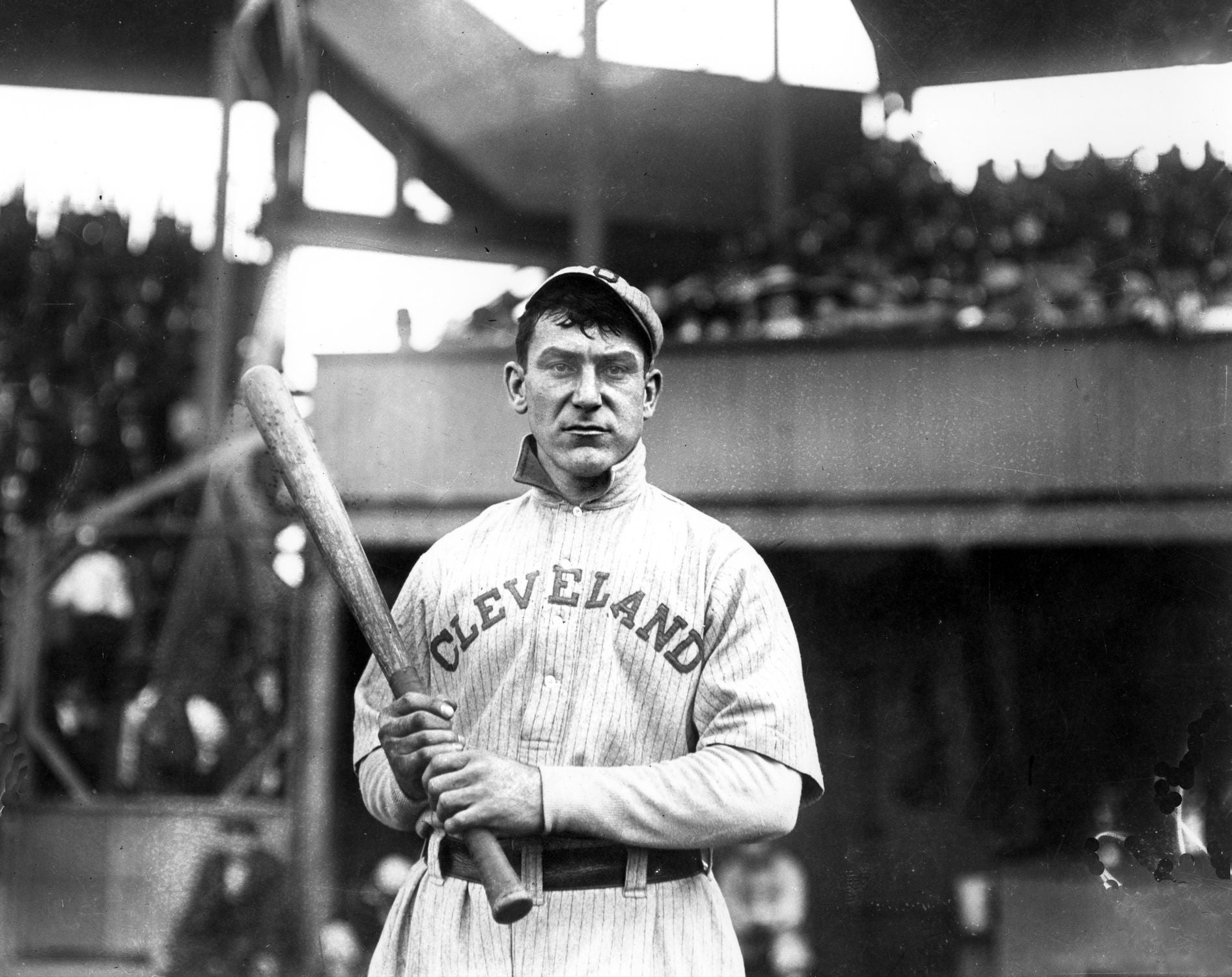
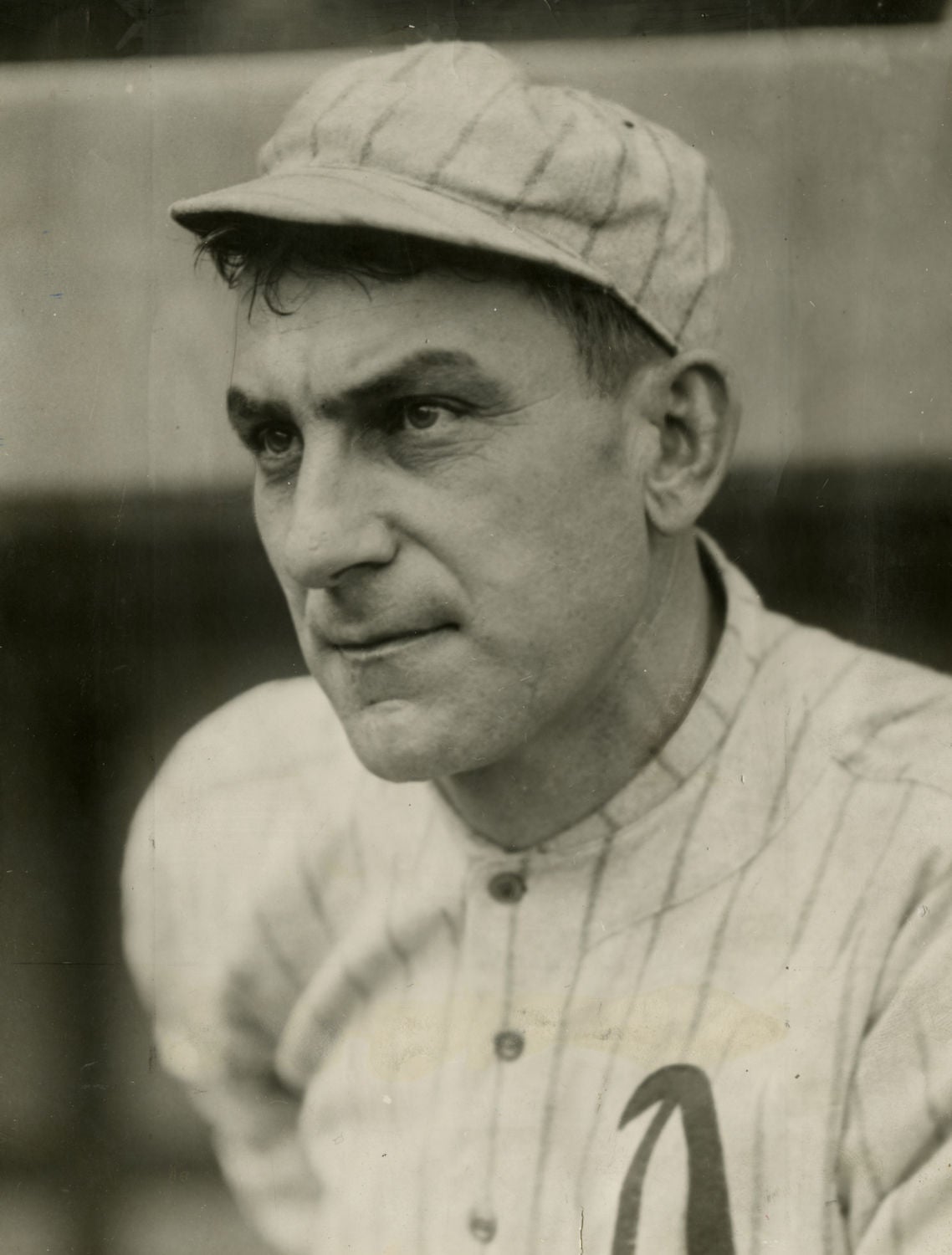
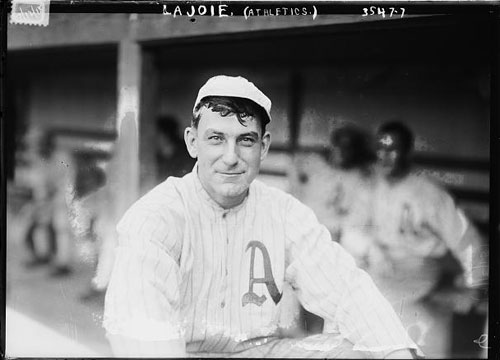
One such player was Napoleon “Nap” Lajoie, a star player for the National League’s Philadelphia Phillies. Indeed, Lajoie was one of the first superstars of the game and was highly sought by the upstart American League. (Indeed, he refused to take a bad photo.) Despite his contract with the National League, Lajoie signed with the new American League team in town: the Philadelphia Athletics (which was to be managed by Connie Mack, who remained the manager of the Athletics for an incredible 50 years—the longest-serving manager in Major League Baseball history—amassing records for wins (3,731), losses (3,948), and games managed (7,755)).

Continue reading →

Baseball-and-Reserve-Clause-300x207

Author: Luke Hasskamp

This is the first of a series of articles intended to address some of the interesting intersections between the law and baseball, particularly baseball’s curious exemption from federal and state antitrust laws. More generally, it’s about the struggle between team owners and players since the dawn of professional baseball, and some of the quirks to emerge along the way.

You can read the second part of the baseball and antitrust series here: The Owners Strike Back (And Strike Out).

The third part of the series is Baseball Reaches the Supreme Court.

The fourth part of the series is baseball’s antitrust exemption.

The fifth part of the series is Touch ’em all, Curt Flood.

This article starts at the beginning with a fledgling set of teams in the National League in the late 19th century—with team owners trying to turn consistent profits and players beginning to emerge as stars, and the tension between the two.

The trouble started in 1879, when the owners of the teams in the National League agreed on the “reserve clause” which was a provision included in player contracts that effectively bound the player to his team for his entire career. (Here’s an example of such a reserve clause.)

At the time, most National League teams were losing money and faced bleak financial prospects. To curb expenses, the teams agreed on a strategy to keep salaries down: each team would be allowed to “reserve” up to five players for the following season. This meant that no other team could sign a reserved player unless he received permission to do so.

As expected, each team elected to reserve their five best players, i.e., their most expensive players. With no market competing for players’ services, team owners were able to suppress salaries for elite talent and increase profits. Indeed, just two seasons after the adoptions of the reserve clause, most teams had become profitable, the first time that had happened.

 Due to this success, the owners saw no reason to limit the reserve clause to the top five players. They steadily increased the reserve limit until, by 1887, a team was permitted to reserve its entire roster, 14 players at the time. 1887 is also the year that the reserve clause became an explicit provision in players’ contracts; until then, it had at first been a secret agreement between the owners and then, after it leaked, simply become a league rule that all players were required to abide by. Importantly (for the owners), the reserve clause crept beyond the National League into other competing leagues that would emerge during that time, including the American Association and the American League, which both agreed to honor National League’s reserve lists.

At this time, the contracts were decidedly one sided. Although teams effectively controlled a player for the entirety of his career, nothing bound the teams to their players, except for their contracts (and virtually all contracts had one-year terms). Any player could be traded or sold at any time, and they could be released on just 10-days’ notice.

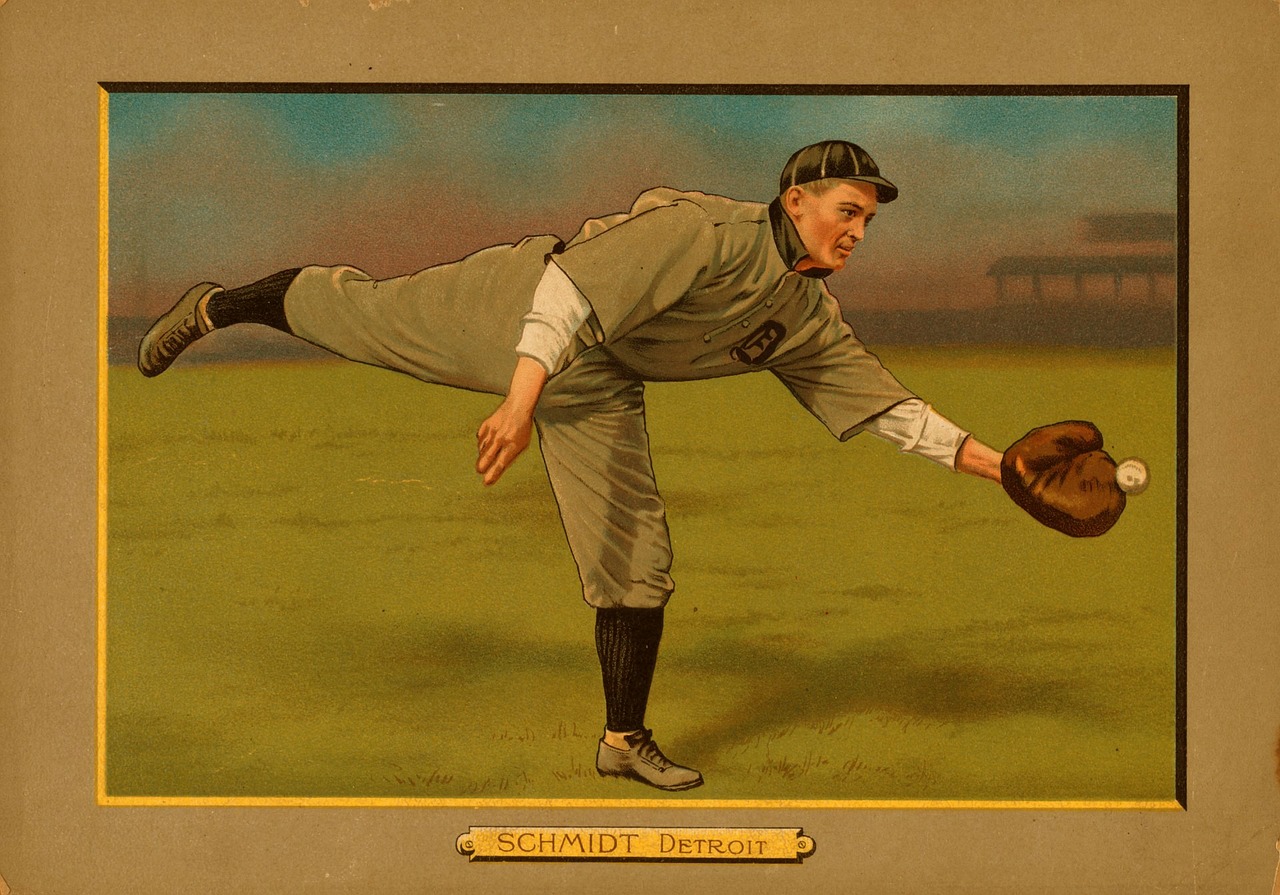
John Montgomery Ward became an important early figure in challenges to baseball’s reserve clause. Known as Monte Ward during his playing days, he began his career at 19 as a pitcher for the Providence Grays. In 1879, he went 47–19 with 239 strikeouts and a 2.15 ERA, pitching 587 innings. The following season Ward went 39–24 with 230 strikeouts and a 1.74 ERA pitching 595.0 innings. Ward also has the distinction of pitching the second perfect game in professional history as well as the longest complete game shutout, going 18 innings in a 1-0 win over the Detroit Wolverines 1–0 on August 17, 1882, a record that will never be broken. (He also has a pretty epic baseball card.)

Following an injury to his pitching arm that, remarkably, was not attributed to his workload but to a mishap while sliding, Ward’s performance as a pitcher began to diminish, so the Grays sold him to the New York Gotham before the 1883 season (they were renamed the New York Giants in 1885.) The move was fortuitous for several reasons, including the fact that it enabled Ward to enroll at Columbia Law School, where he graduated in 1885.

Using his legal training, Ward organized and led the first labor union in professional sports, the Brotherhood of Professional Baseball Players. The principal goal of the Brotherhood was to raise player salaries, which had remained stagnant even though baseball’s popularity (and revenues) had risen considerably. A chief target of the Brotherhood’s effort was the reserve clause, which continued to suppress players’ salaries and limit their mobility.

Continue reading →

Illinois-Brick-and-Indirect-Purchaser-Antitrust-Claims-300x200

Author: Jarod Bona

Thanks to a 1977 US Supreme Court case called Illinois Brick v. Illinois, class-action-antitrust plaintiff claims may look strange.

You might expect to see named plaintiffs for a class of allegedly injured parties suing defendants (and it is usually multiple defendants) under the federal antitrust laws for damages. And you do see that—those are usually called the “direct purchasers.”

But what is unexpected is that you also often see another separate group of putative class members suing for the same alleged anticompetitive conduct in the same federal court, except they are suing under state antitrust laws—but only some state antitrust laws—for damages. These are usually called the “indirect purchasers.” And they can sue for antitrust damages under the state antitrust laws of what are called the “Illinois Brick repealer states.”

(The indirect purchasers also often sue for injunctive relief under federal antitrust law.).

This doesn’t seem to make much sense. What is going on here?

Good question.

I’ll do my best to explain.

But first, I want to remind you that even though Bona Law represents both plaintiffs and defendants in antitrust litigation, we do not typically represent class action plaintiffs in antitrust cases, and in fact, represent defendants in antitrust class actions. Indeed, this has been a large part of my career, going back to my time at Gibson, Dunn and DLA Piper. So—for that reason—I may be biased on these plaintiff antitrust class action v. defendant issues. That bias could seep into my description and explanations below.

Let’s use an antitrust price-fixing case to illustrate how this works (as many large antitrust class action cases involve price-fixing anyway):

So let’s say that the world figures out that the Antitrust Division of the Department of Justice is investigating three companies, making up an industry, for price-fixing. How did the world figure that out? Well, maybe DOJ obtained criminal indictments or a public company had to make note of it in its SEC filing?

You will then often see a blizzard of antitrust filings in federal courts throughout the country by an industry of antitrust class action plaintiff lawyers. As described above, some of these will be for direct purchasers and some for indirect purchasers.

Simply stated, a direct purchaser is someone that purchased a product directly from a defendant. An indirect purchaser is someone that purchased the product that came from a defendant, but not directly—instead, through some intermediary like a retailer or distributor.

If both direct purchasers and indirect purchasers are part of the same lawsuit or suing a single group of defendants under the same claim, there is this sticky question of, even conceding that there was price-fixing, who was damaged and by how much? That is, the price-fixing may have increased the prices that the direct purchasers literally paid compared to the but-for world without price-fixing, but what if the direct purchasers were retailers or distributors that merely passed along all or some of that overcharge to people that purchased from them (i.e. indirect purchasers)? Then the direct purchasers weren’t really injured or their damages were less than the amount of the overcharge from defendants’ price fixing.

What do you do with that?

Well, in 1968, the Supreme Court in Hanover Shoe, Inc. v. United Shoe Machinery Corp. said you had to ignore that problem. That is, the Supreme Court forbid antitrust defendants from raising as a defense that the direct purchasers had passed on any overcharge.

Okay, well, sometimes if you ignore a problem, it will go away.

But then indirect purchasers began suing under the federal antitrust laws and defendants were thus potentially subject to paying damages twice: Once to direct purchasers that had passed on overcharges (they couldn’t use that as a defense) and a second time to indirect purchasers who had received the overcharge from direct purchasers.

This hardly seemed fair, so the United States Supreme Court in the classic case of Illinois Brick v. Illinois decided in 1977 to put a stop to it: Henceforth, indirect purchasers could no longer sue for damages under the federal antitrust laws. So—again—the Supreme Court essentially said that we were just going to ignore the problem of pass-through from direct purchasers to indirect purchasers.

The Illinois Brick Court actually described three primary reasons for refusing to allow indirect purchaser suits for damages under the federal antitrust laws. First, doing so would allow for more effective enforcement of the antitrust laws (as splitting rewards for the overcharge among two different classes might dilute incentives of one or the other to file federal antitrust claims). Second, prohibiting indirect purchaser federal antitrust claims would avoid complicated damages calculations. And finally, allowing both direct and indirect purchaser federal antitrust claims would create the potential for duplicative damages against defendants.

Maybe now the problem would go away?

Continue reading →

California-Law-300x225

Author: Jarod Bona

It depends. But probably not. Outside of California, courts may enforce these non-compete agreements arising out of an employment contract. Of course, most courts, no matter what the law and state, view them skeptically. In California, however, the policy against these agreements is particularly strong.

A restrictive covenant is often part of an employment agreement that restricts the employee’s actions after leaving employment. They typically prohibit the employee from competing in particular markets for a period of time after leaving the employer, but may also keep the employee from soliciting the company’s customers or even employees after leaving.

They are, unquestionably, restraints on trade. But are they unreasonable restraints on trade? In many states that is the issue—if they are reasonable, a court will enforce them. What does reasonable mean? Again, it depends. But typically, like other restraints on trade, they must usually be narrowly tailored to serve their purpose. They should contain “reasonable” limitations as to time, geographic area, and scope of activity.

The laws, of course, vary from state to state. But as a practical matter, most judges are skeptical. Some courts will actually rewrite the agreements to make them reasonable.

The purpose of these restraints is to offer protection to an employer that must necessarily share trade secrets and sensitive customer or financial information with their employees. The concern is that this information is so sensitive and easily exploited by a competitor that the employer needs the restrictive covenant to keep an employee from leaving and benefiting from the information as a competitor. It also reduces the likelihood of free-riding on training.

Despite these benefits, California law and courts take a hard stand against certain restrictive covenants. The California Supreme Court in Edwards v. Arthur Anderson LLP explained, for example, that “judges assessing the validity of restrictive covenants should determine only whether the covenant restrains a party’s ability to compete and, if so, whether one of the statutory exceptions to Section 16600 applies.” (exceptions include the sale of goodwill or corporate stock of a business).

Continue reading →

State-and-Local-Government-Antitrust-Violations-300x205

Author: Jarod Bona

Lawyers, judges, economists, law professors, policy-makers, business leaders, trade-association officials, students, juries, and the readers of this blog combined spend incredible resources—time, money, or both—analyzing whether certain actions or agreements are anticompetitive or violate the antitrust laws.

While superficially surprising, upon deeper reflection it makes sense because less competition in a market dramatically affects the prices, quantity, and quality of what companies supply in that market. In the aggregate, the economic effect is huge, thus justifying the resources we spend “trying to get it right.” Of course, in trying to get it right, we often muck it up even more by discouraging procompetitive agreements by over-applying the antitrust laws.

So perhaps we should focus our resources on the actions that are most likely to harm competition (and by extension, all of us)?

Well, one place we can start is by concentrating on conduct that is almost always anticompetitive—price-fixing and market allocation among competitors, as well as bid-rigging. We have the per se rule for that. Check.

There is another significant source of anticompetitive conduct, however, that is often ignored by the antitrust laws. Indeed, a doctrine has developed surrounding these actions that expressly protect them from antitrust scrutiny, no matter how harmful to competition and thus our economy.

As a defender and believer in the virtues of competition, I am personally outraged that most of this conduct has a free pass from antitrust and competition laws that regulate the rest of the economy, and that there aren’t protests in the street about it.

What has me so upset?

Continue reading →

Contact Information