Articles Posted in Antitrust Counseling

Articles about antitrust counseling and training.

Coty-Europe-Antitrust-300x200

Authors: Magdalena Jakubicz and Luis Blanquez

Magdalena Jakubicz is a Sr. Corporate Counsel at Cisco where she helps her business clients to achieve their goals while ensuring antitrust compliance across EMEAR and Latin America. Magdalena’s day-to-day responsibilities include the following: designing and delivering compliance programs; co-leading commercial litigations and responses to government inquiries; assisting with merger control fillings; and advising on vertical agreements and matters related to abuse of dominant position. Magdalena also provides legal support to the Cisco Brand Protection team, where she advises on parallel imports and counterfeiting. Finally, Magdalena provides advice on general commercial law matters. The views expressed in this article do not necessarily reflect the views of Cisco or any affiliate companies.

Companies often run selective distribution systems to preserve their brand image. To achieve this, for example, they may prohibit their distributors from reselling their products through third party online platforms such as Amazon or eBay. While this sort of ban may protect brands, it isn’t popular among competition authorities across the European Union (“EU”) countries.

This has been a hot topic in the EU for quite some time now, especially following the publication of Coty Germany GmbH v Parfümerie Akzente GmbH, Case C-230/16.

What is the Coty Case?

Before Coty, the European Court of Justice (“ECJ”) had already ruled that a general ban on Internet sales in the context of a selective distribution system was a so-called “hardcore” restriction (restrictions and business practices that are particularly harmful to competition) and did not comply with Article 101.1 of the Treaty of the Functioning of the European Union (“TFUE”).

This case, Pierre Fabre Dermo-Cosmétique SAS v Président de l’Autorité de la concurrence and Ministre de l’Économie, de l’Industrie et de l’Emploi, Case C-439/09, involved certain cosmetics and hygiene products, manufactured by Pierre Fabre Dermo-Cosmetique and sold mainly through pharmacists.

Pierre Fabre required that its products be sold exclusively through brick and mortar shops and in the presence of a qualified pharmacist. Pierre Fabre argued that the restriction was necessary to maintain the quality of the products. The ECJ disagreed and ruled that “the aim of maintaining a prestigious image is not a legitimate aim for restricting competition.” This case confirmed that companies may want to avoid contractual clauses that prohibit general sales over the Internet.

In Coty, which involved a company that sells luxury cosmetic products in Germany, distributors were not authorized to resell the goods through third party on-line platforms. The General Court (“GC”) held that such a prohibition may be justified provided certain conditions are met. In the GC’s view, the preservation of the company’s “luxury image” is, in fact, a valid criterion. In particular, the GC held that a ban on sales over a particular online platform does not constitute a hardcore restriction under EU competition law. The judgment caused some sensation as—although a general ban on any sales over Internet would still be contrary to the EU competition law—a ban on sales over particular online platforms may be allowed under Coty.

But, what practical implications has Coty had on businesses with a multinational footprint?

Companies that do business in Europe should consider the following implications of Coty:

Continue reading →

HSR-and-Building-300x240

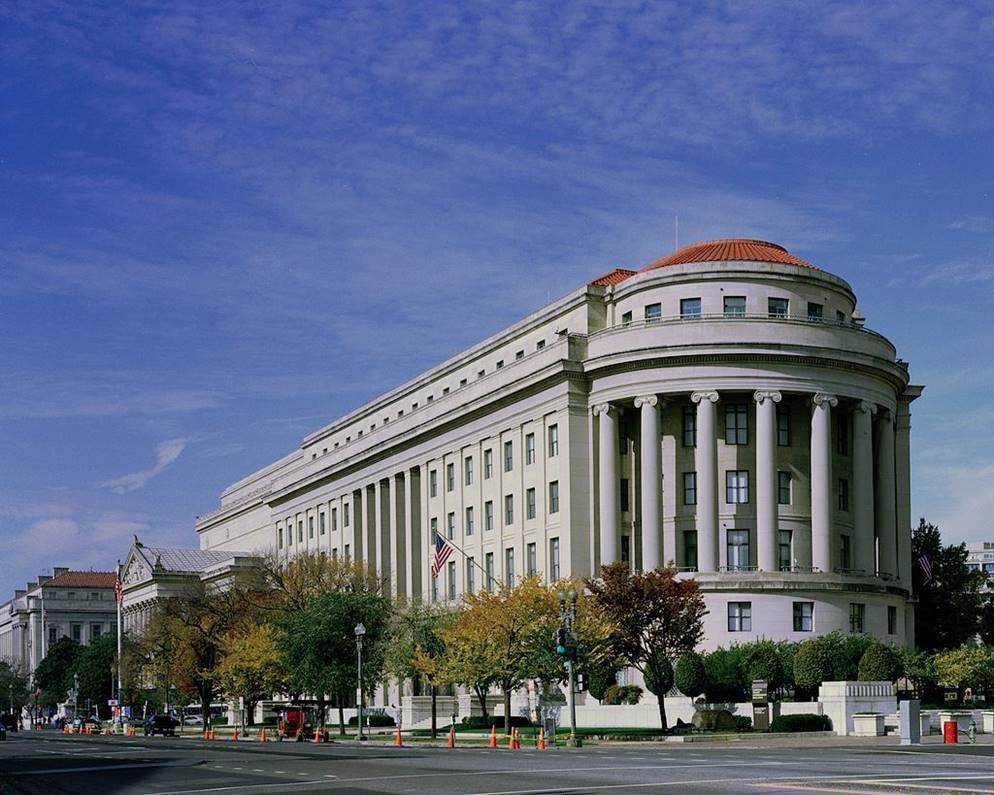
The FTC Headquarters in Washington, DC. The cornerstone to the building was laid in 1937 by Franklin Roosevelt, reportedly using the same trowel George Washington used to lay the cornership of the U.S. Capital in 1793. In the spirit of competition, the National Gallery of Art has set its sights on expanding into the FTC building, and in 2016, the General Services Adminsitration has been investigating the proposal. The FTC has strongly resisted this form of competition for its space.

Author: Steven Levitsky

Under US antitrust Law, parties to certain mergers and acquisitions must prepare what is called a Hart-Scott-Rodino (HSR) filing for the antitrust agencies.

In an earlier article, we mentioned that HSR filings, at least for voting securities and LLC interests, are not triggered by the literal “size-of-transaction” amount.

Instead, they are triggered by a combination of (1) all existing holdings in a target plus (2) what you intend to buy in that target. (In HSR lingo, this is called “aggregation.”) Plus, you need to calculate the total existing holdings across the entire control group. (In HSR lingo, this means all the entities controlled by the “ultimate parent entity.”) When you don’t, you run the risk of being fined $40,654 per day.

Here’s a great example, based on a real-life case. Alpha Fund owns $84 million of Bravo Ltd’s voting securities. Alpha Fund is controlled by Mr. Smith. Because of this control, Mr. Smith is the hedge fund’s “ultimate parent entity,” and he is deemed to “hold” everything in his control group.

Based on his fund’s holdings, Mr. Smith was appointed to the Board of Bravo Ltd. As a board member, he was given stock options for 10,000 voting shares and exercised them. Let’s assume that those shares were worth $50 each, so that the entire option acquisition was only $500,000. This is 0.0059% of the HSR threshold of $84.4 million. But that’s not the way the HSR system works.

What Mr. Smith should have done (or rather, what his lawyers should have done) was combine, or “aggregate,” all his existing holdings ($84,000,000) with the options he was about to convert $500,000). In other words, as a result of his option transaction, Mr. Smith now “held” $85,000,000 of voting securities in Bravo Ltd. But he never made an HSR filing. In this case, the FTC fined him $250,000.

This is actually a simplified version of the real story. In fact, Alpha Fund had previously failed to make an mandatory HSR filing, and had made a corrective filing only later, only proving that it is hard to keep track of acquisitions across a control group. As part of the settlement of the corrective (after-the fact) filing, the FTC always imposes an obligation to create and maintain a compliance program for future acquisitions. The FTC takes the position that a second failure to file proves that the compliance program was not complied with.

By the way, there was absolutely no competitive issue involved in this violation. The control group’s collective holdings in Bravo Ltd. were too low for it to be able to exert any control. Furthermore, Bravo Ltd. granted the options with one single day to exercise them. There was no possibility for Mr. Smith to have made an HSR filing. Despite all these mitigating factors, the fine was imposed simply because there had been an acquisition that required an HSR filing, and no filing was made.

Here’s another complication from the same story. Let’s assume that Alpha Fund bought the shares at $50,000,000, and that over time they appreciated in value to $84,000,000. It’s not clear, but it seems possible that Alpha and Mr. Smith had considered the original acquisition cost of the stock ($50,000,000 plus $500,000). That was another serious mistake, because the HSR rules require you to calculate the current value of your existing holdings. In other words, if your original $50,000,000 investment grows to $85,000,000 through appreciation, you don’t need to do a thing. But you can’t acquire a single dollar more of stock in the same target without making a filing.

Continue reading →

Aspen Mountains

Author: Jarod Bona

Yes, in certain narrow circumstances, refusing to do business with a competitor violates Section 2 of the Sherman Act, which regulates monopolies, attempts at monopoly, and exclusionary conduct.

This probably seems odd—don’t businesses have the freedom to decide whether to do business with someone, especially when that person competes with them? When you walk into a store and see a sign that says, “We have the right to refuse service to anyone,” should you call your friendly antitrust lawyer?

The general rule is, in fact, that antitrust law does NOT prohibit a business from refusing to deal with its competitor. But the refusal-to-deal doctrine is real and can create antitrust liability.

So when do you have to do business with your competitor?

Continue reading →

Sculpture Man Controlling Trade

This 1942 sculpture by Michael Lantz, 17-feet long, is meant to suggest a heroic figure (the FTC) restraining violent and untamed American commerce.

Author: Steven Levitsky

If you liked the old computer game, “Minesweeper,” then you’re ready to take on Hart-Scott-Rodino (HSR) filings for antitrust review of mergers & acquisitions. Both have rules. And both can produce unexpected catastrophes even if you think you’re following the rules. In fact, major clients, advised by major law firms, have been hit with hundreds of thousands of dollars in fines for mistakes that no one thought of at the time.

Let’s start with the 50,000 foot view of HSR compliance. You might know the basics: (a) you need to make an HSR filing when one side of the transaction has sales or assets of at least $16.9 million; (b) the other side has sales or assets of at least $168.8 million; (c) the transaction size is greater than $84.4 million; and (d) no exemptions apply. (These are 2018 figures).

An example to consider

Here’s an example of how things can work out badly. Let’s assume you get a call from the CEO of your client, Alpha Co. Alpha Co. is a small and relatively new company and the CEO tells you:

  1. Alpha’s annual sales and assets are $15 million.
  2. Alpha plans to buy $80 million of the voting securities of Bravo Ltd. (Alpha’s borrowing $65 million to do the deal.)
  3. Based on this, he wants to know if they need to make an HSR filing.

Applying what you know, you conclude that the “size-of-person” and “size-of-transaction” tests are both not met, so no HSR filing is required. Alpha Co. goes ahead and closes the deal.

Three months later, your client hears from the FTC. The FTC tells them that they violated the HSR Act by not filing, and that the fine is $41,484 per day, or $3,733,560 in all. What went wrong? (We’ll explain in detail in Point 2.)

But generally, what went wrong is that the 50,000 foot view is not enough. HSR rules are extremely technical and, some would say, not exactly logical. A lot of HSR terms don’t have a common sense meaning. You need to check and cross-reference the definitions and rules. And these, by the way, are not organized in any friendly or rational way, but seem to read like the Tax Code.

Here are some basic HSR concepts that might help you avoid the worst minefields.

  1. What are the basic HSR tests?

There are two tests to see if a filing is required.

First, “size-of-person.” Normally, you don’t need to file for the antitrust enforcers unless one side of the deal has sales or assets of at least $16.9 million and the other side has sales or assets of at least $168.8 million. (This are 2018 figures; these numbers change every February.)

But, as we’ll see soon in Point 2, the size-of-person test does not mean the size of the transaction party. Instead, it means the size of the buyer’s entire business group, or everything under the control of its highest entity (see §5). Don’t fall into the trap of measuring an incomplete control group.

Second, the “size-of-transaction” must be over $84.4 million (again, this is 2018; the numbers change every February). But there are several other filing thresholds that cover more purchases in the same target and could require successive filings. These include $168.8 million; $843.9 million; 25% of the target — but only if the size-of-transaction is more than $1.688 million; and 50% of the target — or control. Once you get control, you can buy as much more of the target as you want without ever filing again.

But, as we’ll see soon in Point 2, the “size-of-transaction” does not really mean the size of the transaction. Instead, it means (1) the combination of existing holdings and planned acquisitions, (2) that the entire buyer control group will have in the target control group after the deal closes (see §2). This includes voting stock acquired years before, that has to be analyzed at its current value. Don’t fall into the trap of measuring the wrong amount.

  1. What is an “ultimate parent entity” and why does it matter?

The “ultimate parent entity” is the top controlling entity of an entire business group.

The “ultimate parent entity” matters to your antitrust filing for the following reason. The purpose of the HSR filing system is to let the antitrust agencies know of significant shifts in competitive power. As a result, they don’t care about the names on the contract, which may be only small subs or special purpose vehicles. The antitrust agencies want to know what is really happening in terms of changes of competitive power.

To give the agencies that information, you must identify the entire control group of your transaction party. You do this by tracing control upwards from the transaction party (Alpha Co., in our case) to the very highest control level of the business group. That entity at the top, that isn’t controlled by anyone else, is the “ultimate parent entity,” which can be a company or an individual. The “ultimate parent entity” makes the filing. Its collective size and holdings affect the “size-of-person” and “size-of-transaction” tests we discussed in Point 1.

Continue reading →

European-Union-Online-RPM-300x225Author: Luis Blanquez

On July 24, 2018, the European Commission fined manufacturers Asus, Denon & Marantz, Philips and Pioneer for over €111 million for restricting the ability of online retailers to set their own retail prices for a variety of widely-used consumer electronics products.

Background

European-Commission-Enforcement-Actions-300x200

Author: Luis Blanquez

In our prior article, we discussed the European Commission’s final report of its study of the EU’s e-commerce market for consumer goods and digital content.

In this article we describe EU investigations and enforcement actions that arose from the EC’s final e-commerce market study. While the final report itself offers companies doing business in the EU helpful guidance, the Commission’s actual conduct is perhaps an even better indicator of how the EC will implement what it learned.

Since the European Commission published its Final Report, it has opened investigation of about 20 companies.

Below is a summary of the relevant cases that the EC recently opened. We expect additional cases in the future in this area, both at EU and national level.

Geo-blocking cases

Video Games

On February 2, 2017, the EC opened an investigation to analyze bilateral agreements between Valve Corporation, owner of the Steam game distribution platform, and five PC video game publishers:  Bandai Namco, Capcom, Focus Home, Koch Media and ZeniMax.

This investigation concerns geo-blocking practices, where companies prevent consumers from purchasing digital content, in this case PC video games, because of the consumer’s location or country of residence.  After the purchase of certain PC video games, users need to confirm that their copy of the game is not pirated to be able to play it.  This is done with an activation key.

The investigation focuses on whether such agreements require the use of activation keys for the purpose of geo-blocking.

Clothing Company, Guess

On June 6, 2017, the EC opened an investigation against clothing manufacturer Guess.  The EC is analyzing whether Guess’s distribution agreements impose cross-border sales restrictions on (i) retailers making online sales to consumers in other Member States, (ii) or wholesalers, selling to retailers in other Member States.

Interestingly, as a result, other clothing manufacturers such as Mango, Oysho and Pull&Bear have now started to review and revise their distribution agreements.  Other companies, such as coffee machine manufacturer De Longhi, and photo equipment manufacturer Manfrotto, are doing the same (See here).

Hotel Pricing Discrimination

On February 2, 2017, the EC opened another investigation into hotel accommodation agreements between the largest European tour operators on the one hand: Kuoni, REWE, Thomas Cook and TUI, and Meliá Hotels on the other hand.

The EC encourages hotels to develop and introduce innovative pricing mechanisms to maximize room usage.  But the EC is concerned that these agreements may contain clauses that discriminate among customers based on their nationality or country of residence.  As a result, customers may not be able to see the full hotel availability, or book hotel rooms at the best prices, simply because of the consumer’s nationality or place of residence.

Licensed Merchandising Products

On June 14, 2017, the EC opened more investigations into the licensing and distribution practices of Nike, Sanrio and Universal studios.  These three companies license intellectual property rights to manufacturers of merchandising products such as the Fútbol Club Barcelona, Hello Kitty and Minions merchandise, respectively.

The EC is concerned that these companies, in their role as licensors of rights for merchandising products, may have restricted the ability of their licensees to sell licensed merchandise cross-border and online.

Resale Price Maintenance cases

Consumer electronics manufacturers

The EC has opened another investigation against Asus, Denon & Marantz, Philips and Pioneer.  In this case, the EC is concerned that the companies involved might be restricting the ability of online retailers to set their own prices for widely used consumer electronics products such as household appliances, notebooks and hi-fi products.

This is the first resale price maintenance case that the EC has initiated in a long time.  Instead, the Member States themselves have scrutinized resale price maintenance at national level during the last decade.

Germany, for example, has recently published a new guidance note on resale price maintenance. The Competition and Markets Authority (“CMA”) in the UK also published additional guidance on these types of pricing agreements in the form of an open letter, a film, a 60-second summary, and  case studies.

Indeed, the CMA recently fined National Lighting Company (NLC), a light fittings supplier, £2.7 million for restricting online prices. They also sent out warning letters to others in the industry.  In 2016, the CMA also fined two other online companies for resale price maintenance practices: Ultra Finishing Limited (“Ultra”) in the Bathroom fittings sector and ITW Limited in the commercial refrigeration sector.

Continue reading →

EU-ECommerce-Report-300x200

Author: Luis Blanquez

  1. BACKGROUND

Over the past two years, the European Commission (“EC”) has been scrutinizing the e-commerce market of consumer goods and digital content in the European Union.  This is a key step on the Commission’s Digital Single Market strategy to improve access to digital goods and services.

Such strategy includes legislation to promote cross border e-commerce through the following:

In May 2015, the EC started in parallel its Sector Inquiry to identify possible competition concerns affecting European e-commerce markets.  Its main purpose was to gather information on companies’ conduct and barriers to cross-border online trade, looking at online sales of consumer goods and digital content.  In September 2016, the EC published a report with its preliminary findings, together with a Staff Working Document.

Finally, in May 2017, the EC issued its Final Report.

You can read our follow-up article to this one about ongoing EC enforcement actions arising out of the E-Commerce Report.

You might also enjoy our articles on EU dominance abuse and antitrust compliance programs in the US and EU.

  1. RELEVANT FINDINGS

The EC outlines in the Final Report what it considers as the key issues in the field of e-commerce.  It acknowledges the changing characteristics and fast-growing tendency of a sector with an increasing economic role in today’s economy. It further identifies business practices and barriers that could restrict competition and limit consumer choice.

The EC reviewed more than 2,600 agreements concerning the distribution of goods in the EU, and received more than 6,800 licensing agreements from digital content providers and rights holders.  The main findings in the Final Report differentiate between consumer goods and digital content.

(A) CONSUMER GOODS

Contractual Restrictions on Cross-Border Sales: Geo-Blocking

The Sector Inquiry identifies contractual restrictions between operators in the online market that the EC believes could cause problems.  Unilateral decisions by non-dominant firms, however, fall outside the scope of EU competition law.

But before telling you which contractual restrictions are problematic, let me explain first what the term “geo-blocking” means.  Basically, it refers to practices that prevent cross-border sales in the EU.  These include the following:

  • Blocking access to websites by users located in another Member State—for example when a customer located in Madrid tries to acquire a product via a French website, and is prevented from doing so because the website has been blocked due to its Spanish IP address;
  • Automatic re-routing of a customer to another website of the same or a different service provider—for example when a customer located in Madrid trying to access a French website is directly re-routed to the company’s Spanish website; or
  • Payment refusals based on the place of residence of the customer—for example when the payment to the French website is refused because the credit card used is linked to an address in Spain, or the delivery to Spain is denied based on the customer’s residence.

So back to the relevant contractual restrictions now:  The EC is concerned about how retailers face contractual restrictions from suppliers, which prevent such cross-border selling on-line.

These questioned agreements are ones that (i) are not covered by the EC “safe harbor” under the Vertical Block Exemption Regulation (“VBER”) – this is if parties to the agreements have market shares above 30%, or there are hardcore restraints involved, (ii) preventing cross-border sales between Member States in distribution agreements, may infringe EU Competition rules.

Restrictions on the use of online marketplaces

An online marketplace is a website that facilitates shopping from different sources, such as Amazon or eBay.

An absolute ban on online selling is considered a hard-core restriction under EU law.  There is, however, an important ongoing debate in Europe as to whether an absolute ban on selling via marketplaces is contrary to EU rules.

In Germany, the Bundeskartellamt issued an infringement decision against Asics on its ban to sell via online marketplaces. In April 2017, the Dusseldorf Regional Higher Court found that only the price comparison tool restrictions involved in the case were anticompetitive.

At EU level there are currently two preliminary rulings pending.  One the Coty case, where the high EU court has been asked to analyze the restrictions imposed on a selective distribution agreement by manufacturer Coty on one of its authorized distributors to sell products via third party online platforms. The second one is the Samsung and Amazon case, concerning a ban on resale outside a selective distribution network and on a marketplace, by means of online offers on several websites operating in various Member States.

In its Final Report, the EC does not consider marketplace selling bans as hardcore restraints.  It may, however, still scrutinize them on a case by case basis, if parties to the agreements have market shares above 30%, or there are hardcore restraints involved, according to the VBER.

Selective distribution agreements: Requirements for brick-and- mortar shops

Contractual requirements to operate at least one brick-and-mortar shop under a selective distribution agreement are compatible with the EU competition rules, as long as they are linked to quality or brand image.

The EC, however, states in its Final Report that brick-and-mortar shop requirements imposed for the sole purpose to exclude online operators from the market, may infringe EU competition rules.

Pricing restrictions: Resale Price Maintenance (“RPM”) and Price collusion

E-commerce has significantly increased price transparency, competition on price and opportunities for users to compare different options in the internet.  According to the EC’s investigation, almost 30% of manufacturers systematically track resale prices: 67% track resale prices manually, whereas 38% use specific software (spiders).

The Final Report highlights that this may also increase the risk of RPM or collusion between competitors.

Resale Price Maintenance (RPM)

The imposition of minimum resale prices is considered a hardcore restriction under EU Competition law.  Similarly, when manufacturers seek to enforce compliance with recommended prices through contractual restrictions or some form of coercion, they may also infringe competition rules.

The EC is concerned that online price transparency may facilitate such practices, making it easier for manufacturers to detect deviations and enforce RPM provisions.

You can read articles on The Antitrust Attorney Blog on Resale Price Maintenance here.

Price collusion

Price fixing between competitors is considered one of the most serious infringements under EU competition rules.

The Final Report found that almost 50% of retailers track online prices of competitors, and 78% of them use software to monitor rivals’ prices, adjusting their own prices accordingly.

The EC is thus concerned that price monitoring may facilitate or strengthen collusion between retailers, by making the detection of deviations from the collusive agreement easier, while allowing them to counteract by adjusting their prices.

Continue reading →

FTC State Action ImmunityIn early 2015, the U.S. Supreme Court held in North Carolina State Board of Dental Examiners v. FTC that the “active state supervision” prong of the state-action immunity from antitrust liability test applied to state licensing boards controlled by market participants. You can read my analysis of the decision here. And you can read the amicus brief that Bona Law filed in the case here.

(Besides the “active state supervision” requirement, state-action-immunity applicants must also demonstrate that the challenged restraint was clearly articulated and affirmatively expressed as state policy by a state sovereign, like a state legislature. The Supreme Court recently addressed this requirement in FTC v. Phoebe Putney Health System, Inc. I filed an amicus brief in this case, which you can review here.)

Update: The FTC applied its Active State Supervision criteria in an enforcement action against the Louisiana Real Estate Appraisers Board.

The Basics of Antitrust Liability and State-Action Immunity for State Regulatory Boards

I have written quite a bit about state action immunity and the NC Dental case, so I won’t give a lot of background here. You can read my prior articles.

But here are the basics: Not surprisingly, state and local governments often engage in anticompetitive behavior. Sometimes this includes conduct that the federal antitrust laws prohibit.

But, owing to federalism and the fact that governments get away with things they shouldn’t, sometimes state and federal governments have a get-out-of-antitrust-liability card called “state-action immunity.” Like all antitrust exemptions, Courts interpret the scope of state-action immunity narrowly.

In most situations, a state or local government seeking state-action immunity must demonstrate that (1) the state sovereign—usually the legislature or state supreme court acting legislatively—clearly articulated and affirmatively expressed the challenged restraint as state policy (See Phoebe Putney); and (2) that the state actively supervises the anticompetitive policy.

Before the US Supreme Court decided the NC Dental case, it was an open question whether state licensing or regulatory boards were required to show both prongs of what is called the Midcal test, or just the first prong. That is, it wasn’t a given that these state boards had to show active supervision. I addressed that very issue in a law review article, which you can read here. But apparently my article wasn’t enough to end discussion on the issue, so the US Supreme Court went ahead and addressed it in the NC Dental v. FTC case.

The Supreme Court in NC Dental went on to hold that a state board on which a controlling number of decision-makers are market participants in the regulated occupation must satisfy the active supervision requirement to invoke state-action antitrust immunity.

(As an aside, certain municipalities do not need to show active state supervision, but I suspect that courts will continue to narrow this exception. Luke Wake and I argued in another law review article that whenever the government entity becomes a market-participant, it should lose its state-action immunity entirely. I mention this here because it is often a local government entity that competes directly in the market and tries to invoke state-action immunity.).

So we now know that anticompetitive conduct by state regulatory boards are subject to antitrust scrutiny unless they can show both prongs of the Midcal test, including active state supervision. But what is active state supervision?

What is Active State Supervision for State-Action Immunity from Antitrust?

Active Supervision is something that the US Supreme Court has on occasion addressed, but there isn’t a clear standard. It simply hasn’t come up enough to create a dense body of law. So the guidance is slim.

Continue reading →

Section 5 of the FTC ActFTC Commissioner Joshua Wright recently announced his retirement from the FTC Commission to go back to George Mason University School of Law. But he did not go out quietly.

Not only was he incredibly productive during his FTC tenure, but he left right after the Federal Trade Commission issued “Principles Regarding ‘Unfair Methods of Competition’ Under Section 5 of the FTC Act.” As you may recall, this was one of his express goals when he first began his work at the FTC.

What is Section 5 of the FTC Act?

Section 5 of the FTC Act declares that “unfair methods of competition in or affecting commerce” are unlawful.

What does that mean?

For most of the FTC’s existence, those of us advising antitrust clients had to piece together inferences from a mere handful of cases that have addressed the Act, while at the same time trying to parse speeches and FTC activity by whatever set of commissioners were in power.

There were some cases—mostly decided in the 1980s—that seemed to limit the FTC’s power under the Act, but the authority is sparse. And the FTC seems to change its mind depending upon who is in power.

That is a problem when you have a client that wants to know if they can undertake some sort of activity. It is even more difficult when your client is already under investigation by the FTC and you have to try to explain to them that the standard of whether they have violated the FTC Act—regardless of the legality of their actions under the Sherman and Clayton Acts—would be determined by their adversary, the FTC.

We could advise the client that some prior cases suggested limiting principles, but it was, in reality, entirely unclear how a court would ultimately approach an enforcement action. And many courts might prefer to defer to the governing agency in interpreting the law the agency administrates.

This open-ended statute, of course, offered the FTC great leverage in its investigations and actions because its targets couldn’t effectively predict the likely scope of Section 5 of the FTC Act. This leverage can lead to forced settlements for targets that don’t know the standard by which the agency will judge them.

And the FTC had not issued any significant guidance about how it would enforce Section 5 of the FTC Act. It was clear to most people in the antitrust community that the Act was potentially broader than the Sherman and Clayton Acts—the traditional antitrust statutes—but the extent and scope were unclear.

(As an aside, the FTC does its antitrust enforcement through this FTC Act, even if it involves existing antitrust statutes, so the only real issue is how much broader is the FTC Act than the other antitrust statutes. The FTC refers to this as their “standalone” Section 5 authority).

The scope of Section 5 of the FTC Act was an important issue because when it comes to competition enforcement there is a very fine line between anticompetitive activity and strong procompetitive activity. Indeed, it isn’t always clear whether a particular type of business practice is either strongly procompetitive or actually anticompetitive.

So if Section 5 of the FTC Act is too broad it might deter conduct that in fact helps competition a great deal, which would undercut the purpose of the statute itself. This is a recurring problem for antitrust enforcement.

Continue reading →

real estate agent antitrustI’ve often written about real estate on this blog. There are two reasons for this.

The first and most important reason is because my wife and I invest in real estate and thus talk about real estate, so it is on my mind.

The second reason is that real-estate, in addition to its many advantages, creates many unique competition issues. Real-estate agents often engage in cut-throat competition with each other, sometimes even within the same brokerage firm. Yet, the nature of their job requires them to work together for almost every transaction.

In addition, the markets to sell real-estate are primarily local, even though national brokerage firms may dominate each individual geographic area. Within each locality, there are often a handful of large brokerage firms.

Finally, the market for real-estate services and commissions suggests some supra-competitive pricing in that most firms in a certain area will charge approximately the same commission. And the splits between the buying and selling agents are often equal as well. In the Minneapolis, Minnesota area for example, at least as of a few years ago, selling agents would often receive 3.3% and buying agents 2.7% of the purchase price. In my current market, a small village in North San Diego County, the buying and selling agents typically split the 5% commission.

Suspiciously, while technology and other competition has reduced relative prices for many professionals, commission percentages have held relatively steady for real-estate agents, despite the fact that buyers and sellers (especially buyers) can do much of their own homework online. How many of you have purchased a house without spending a lot of time online yourself looking at listings?

So does that mean that real-estate brokerage firms and agents are violating the antitrust laws all over the country? Should we coordinate a dramatic—made for the movies—event whereby federal agents knock down the doors of real-estate firms all over the country one morning, handcuffing and booking the agents that would do anything to get you in their car to show you some houses?

Probably not yet.

In November of this year, the Sixth Circuit decided a case called Hyland v. Homeservices of America, Inc. that nicely illustrates the line between antitrust violation and what is often called conscious parallelism or oligopolistic price coordination.

In Hyland, a class of people who sold residential real estate in Kentucky and used certain real-estate agents sued several real-estate brokerages as a class action under Section 1 of the Sherman Act. Plaintiffs alleged that defendants participated in a horizontal conspiracy to fix the commissions charged in Kentucky real-estate transactions at an anticompetitive rate.

Like agents in many localities, defendants each charged a typical or standard commission rate of 6%, and mostly resist any attempts to negotiate a lower rate. The buying agent’s commission is typically 3%. These numbers may look familiar to you if you bought or sold real estate recently, as real-estate services for most residential real-estate markets are similarly priced.

Continue reading →

Contact Information