Articles Posted in Politics and Antitrust

Tech-Hearings-Amazon-Antitrust-300x150

Author: Steven Cernak

The U.S. House Antitrust Subcommittee of the Judiciary Committee’s recent hearings into “big tech” and antitrust were “must see TV” for antitrust attorneys.

Over the five hours of testimony, many interesting questions were asked of the leaders of Apple, Google, Facebook, and Amazon; unfortunately, the format often left little time for answers.  Because so many of our clients—manufacturers, retailers, and others—are active in the online retail space, we thought we would focus on Amazon and Jeff Bezos’s statement and answers.

These hearing are not the only antitrust scrutiny that Amazon is receiving.  The FTC and the states of California and Washington appear to be investigating the company and its actions.  Given all the publicly available information, what did the hearings teach us about the kinds of antitrust claims that might be made against Amazon in any antitrust suit?

Competing with Private Label Goods

Several of the questions involved allegations that Amazon had somehow “stolen” or misused data from some of its manufacturers or third-party sellers to determine which products it would begin to produce as private label goods.  Many of these questions grew out of a long Wall Street Journal report in April.  Bezos explained that Amazon’s policy is not to use data of an individual seller to make such decisions, although the company continued to investigate possible violations.  Also, Bezos clarified that aggregate data, which he defined as data relating to at least two sellers, could be used by Amazon under its policy.

As commentators have pointed out, retailers deciding to sell private label goods along with, or instead of, branded goods is not inherently an antitrust violation; in fact, many retailers like Kroger’s and Costco obtain significant revenue from the practice.  Bezos himself pointed out that Amazon’s policy limiting its use of data from the other sellers was “voluntary” and not required by any current law.  One of the questions at the hearings hinted at an allegation that Amazon might be in a different position than other retailers, either because of its size or greater access to seller data; unfortunately, inadequate time was given for a response.  Any antitrust actions here would need to be able to take on all private label goods sold by large retailers or explain why Amazon’s actions are uniquely anti-competitive.

Predatory Pricing

At least two sets of questions focused on potential “predatory pricing” by Amazon, that is, pricing products so low that competitors are forced out of the market.  The first set involved allegations from many years ago that Amazon had drastically lowered prices on diapers to weaken Diapers.com, later renamed Quidsi before Amazon purchased it.  In response to questioning, Bezos claimed to be unfamiliar with the details of pricing of one product nearly ten years ago.  In the second set, Bezos was asked if Amazon ever priced Echo or Ring or other in-home assistants below cost.  He claimed that the price of those products usually was above cost, although sometimes their prices might be below cost during periodic promotions.

As readers of this blog know, current law makes predatory pricing illegal only if a monopolist’s prices are very low, usually defined as below variable costs, and there is a chance that the monopolist can later raise prices to recoup its losses.  Certainly, not enough time was spent on the topic during the hearings to address those details in these Amazon examples.  Also, other commentators have already disputed the implications from the Quidsi story, describing it as another example of a retailer using a pro-competitive “loss leader” strategy to build customer loyalty to the store.  (In fact, it appears that Quidsi was trying to follow that exact strategy itself.)  While the questions did not directly lead to evidence of a violation under today’s law, it is possible that these hearings will lead to legislation to alter antitrust law’s current view of such aggressive pricing.

“Bullying” Competitors and Suppliers

Finally, Bezos was asked several times in several ways about Amazon’s treatment of its “partners,” both the manufacturers and third-party retailers who sell to consumers on its marketplace as well as manufacturers who sell directly to Amazon.  Many of the questions included quotes from anonymous third parties who felt a need to be on Amazon:  “have to work with them,” “we’re stuck,” “nowhere else to go.”
Continue reading →

Competition-in-Politics-Harvard-Business-Review-300x169

Author: Jarod Bona

As antitrust attorneys, we advocate for competition in product and service markets. The US Supreme Court recognizes that “the heart of our national economy long as been faith in the value of competition,” and we agree.

But competition matters elsewhere too. We certainly see it in sports. You might notice that sport leagues strive to increase parity to make the league more competitive overall. So when your favorite NFL Football team creates twelve to sixteen sleepless nights for you one year, the league rewards it with a high draft pick the next year. And if your team wins more than it loses, the NFL scheduling gods will punish them the next year with a tougher path to the playoffs.

Anyway, if you read the Harvard Business Review, you may have noticed an article that is sure to pique the interest of an antitrust lawyer like myself. (July-August 2020 Issue). It isn’t about sports, but it is still interesting.

Katherine M. Gehl and Michael E. Porter wrote “Fixing U.S. Politics: What business can—and must—do to revitalize democracy.”

Everyone seems unhappy with the current state of political affairs—so maybe more competition is the solution?

(This is a good reminder that every profession—including antitrust attorney—sees solutions to problems through their own, very specific, eyes. Knee injury? You need more competition. Of course, it isn’t always effective.)

Before we jump into Gehl and Porter’s work, as a disclaimer, Bona Law isn’t a political law firm: we don’t take any specific positions on politics or candidates. Our firm is made up of actual people, all of whom have freedom of thought and their own individual views, which we respect. As a firm, we take positions on certain types of policy—like encouraging competition and discouraging the government from destroying competition. But Bona Law is an antitrust law firm, so that’s not a surprise. But when it comes to politics, that is for each person to decide for themselves. Politics is personal.

According to the authors, politics are driven by the same five forces that affect more traditional markets: “the nature and intensity of rivalry, the power of buyers, the power of suppliers, the threat of new entrants, and the pressure from substitutes that compete in new ways.” (117). The authors explain that—unfortunately—the politics industry doesn’t have healthy competition.

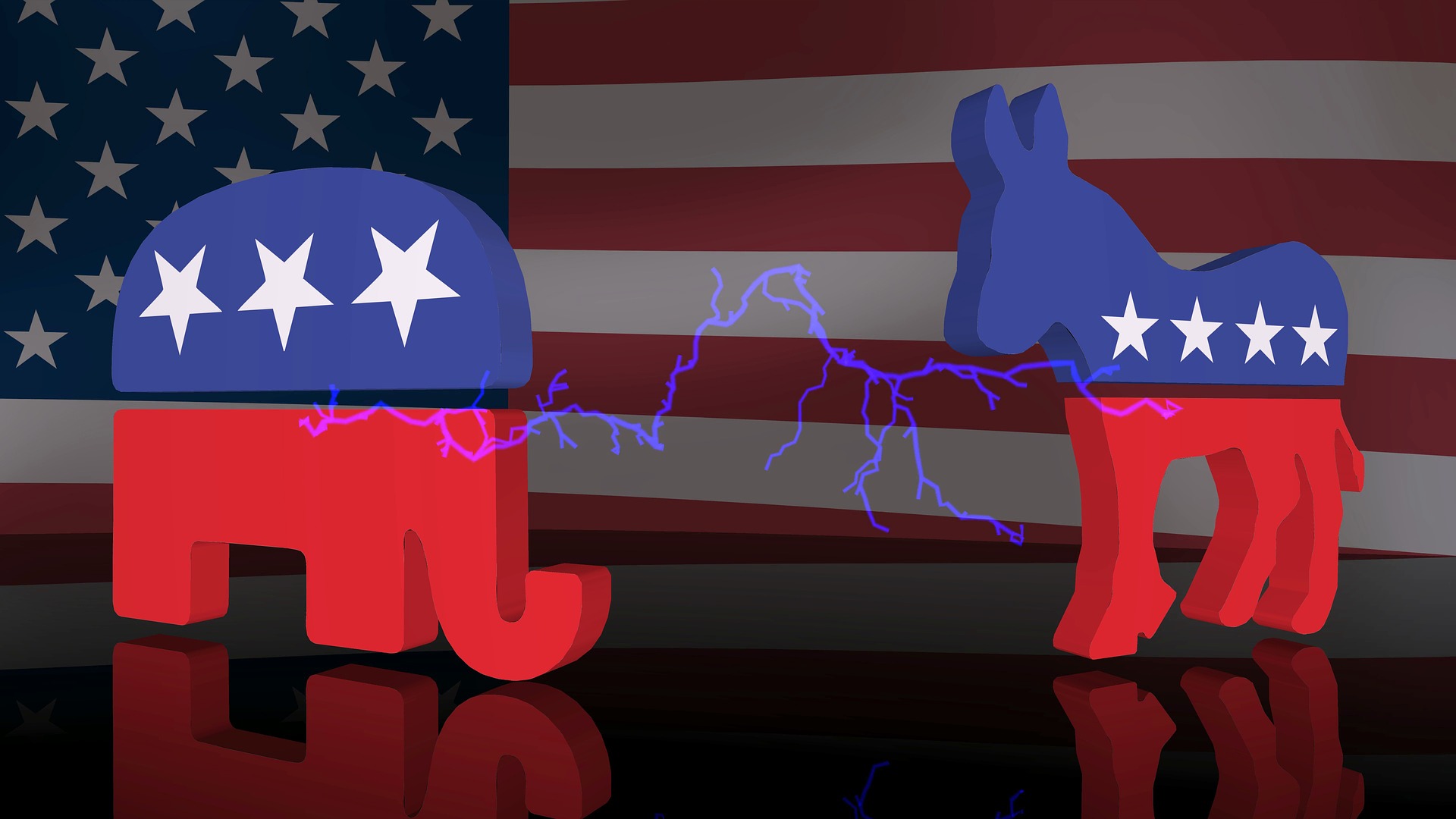
The key problem, according to the authors, is that the Democrats and Republicans have a duopoly and that they work hard to keep it that way—with great success.

Continue reading →

State-Action-Immunity-Legislation-300x200

Author: Aaron Gott

Senators Mike Lee, Ted Cruz, and Benjamin Sasse recently proposed a bill to enact the Restoring Board Immunity Act of 2017, which would give state licensing boards antitrust immunity that they may not otherwise be entitled to under the state-action immunity doctrine. The bill provides this immunity if the states fulfill some conditions: they must make efforts to reform their occupational licensing schemes and either provide active supervision of boards by creating an office to oversee them or provide for a specific form of judicial review of licensing board actions.

While the bill seeks to make some promising advancements to curtail overbearing state occupational regulation, it misses the mark in several ways.

As a Bona Law attorney, I regularly help clients suffering the wrath of professional licensing boards. It is very rewarding work, but it is also difficult work because the entire system—from state executive branches to federal courts—overwhelmingly defers to these licensing boards. The boards are confident in their ability to do whatever they want because they’ve enjoyed extreme deference in constitutional cases since the progressive era.

Our most effective tool is the threat of antitrust litigation—a tool that has only recently been used. First I’ll explain how all of this works so that you can better understand why this bill is a bad idea.

How Licensing Boards Work

Most licensing boards are created by some enabling statute that was pushed through the state legislature after a bunch of competitors in the same industry got together and formed a powerful lobby. Nine times out of ten, a professional licensing board justifies its existence and its conduct with vague and unsupported claims that public welfare is at stake. The enabling legislation often provides the governor the authority to appoint members of the profession, and perhaps one or two “public” members (persons who are not part of the profession), to serve on the licensing board.

Invariably, the board members who also compete in the market eventually use their power on the board to benefit their own pecuniary interests:

Licensing Requirements. . Organizations like the Institute for Justice have analyzed state-by-state data and published significant literature about occupational overregulation. The bill appears most focused on licensing requirements. Antitrust litigation typically does not focus on the licensing requirements category of restraints because they are easy to pretextually justify, because the lobbying effort is protected by the Noerr-Pennington doctrine, and because they primarily affect new entrants (who are unlikely to organize a collective resistance, let alone the resources to finance antitrust litigation).

This raises an important question: if most antitrust litigation against boards does not relate to the occupational licensing reforms sought by the bill, why are we considering a broad antitrust exemption as the carrot for states to implement the reforms?

Expanding the Scope of Practice. Where boards prevent competitors who are not licensees within their jurisdiction from competing with them. A seminal example is what occurred in North Carolina Board of Dental Examiners v. FTC: the North Carolina dental board sent cease-and-desist letters to nondentist teeth whiteners asserting that teeth whitening was the practice of dentistry. Teeth whitening is not mentioned in the North Carolina statutes governing dentistry, but the board asserted it anyway because the dental board members and their professional trade group friends were losing profits to disruptive nondentist competitors who offered lower prices to consumers.

Similarly, the California Veterinary Medicine Board recently sent cease-and-desist letters to animal chiropractors, claiming that performing chiropractic adjustments on animals is the practice of veterinary medicine (even though performing human chiropractic adjustments is not the practice of human medicine).

Setting the Rules of Competition. Where boards prevent competitors who are licensees within their jurisdiction from competing in ways they don’t like. For example, some state funeral director boards have imposed or considered imposing substantial infrastructural requirements on their licensees (such as having an embalming room) with the ultimate goal of restricting the geographic scope of competition.

Side note: state funeral director boards have been among the worst culprits of blatant anticompetitive activity, even going so far as enacting rules to prevent monks who handcraft caskets from competing in the lucrative market for casket sales.

As you can see, boards have substantial power and states don’t seem to care that they regularly abuse it. So at first glance, a bill that incentivizes states to reassess their occupational licensing schemes with a critical eye is probably a good thing, right? If that were what it did, and it didn’t attempt to foreclose otherwise legitimate antitrust claims through the state action doctrine, then it wouldn’t be so objectionable.

The Bill

You can read the text of the bill here, but it works like this: all licensing boards and their members are not subject to the Sherman Act if the following conditions are met:

  1. The actions of the board/member are authorized by a nonfrivolous interpretation of the occupational licensing laws of the state.
  2. The state adopts a policy of using less restrictive alternatives to occupational licensing;
  3. The state either:
    1. Enacts legislation providing for active supervision of the actions of an occupational licensing board, which requires creating a central office to oversee all licensing boards; or
    2. Enacts legislation providing for judicial review of occupational licensing laws.

The bill has a savings clause that states the immunity only applies to “personal qualifications required to engage in or practice a lawful occupation.” As you will see below, this clause could be very important, depending on how courts would construe it.

Continue reading →

Contact Information