 The Antitrust Attorney Blog


Author: Luis Blanquez
Congress didn’t set out to redesign money with the Digital Asset Market Clarity Act. Yet that is where the debate has now landed. The bill—intended to end regulation‑by‑enforcement and draw a workable line between SEC and CFTC authority—has stalled because stablecoins force a choice the status quo would rather avoid. Are digital dollars going to be corralled into a bank‑shaped box, or will they remain programmable cash that pressures incumbents to compete on yield, speed, and service? Everything else is downstream of that decision.
Banks, Stablecoins and the Need for Real Competition
Stablecoins have become the functional rails of crypto today—payment instruments, settlement media, and trading collateral—sometimes accompanied by yields from lending, reserve income, or activity‑based rewards. Banks see this as deposit‑like remuneration without bank‑level prudential rules. And they warn of deposit flight and regulatory arbitrage.
Senate negotiators have responded with draft provisions that limit “interest for simply holding a stablecoin,” while permitting some incentives tied to real activity (e.g., payments volume). Crypto firms counter that this approach smuggles the legacy model back in: if a fully reserved, transparent stablecoin can’t share its economics with users or experiment with market incentives, what exactly is the innovation? And if tokenized assets are pushed back into broker‑dealer rails, how meaningful is on‑chain finance?
This is not a sterile policy scuffle. It’s a market‑structure fork. Treat stablecoins like quasi‑deposits with minimal yield and centralized chokepoints, and you’ll get the same existing incumbent-protection and innovation-fenced banking channels. Treat them as programmable, interoperable dollars with risk‑appropriate guardrails, and you’ll get competition—on rates, UX, interoperability, and transparency.
Base—Coinbase’s Layer‑2 Network
Meanwhile, the market is already revealing the tradeoffs. Consider Base—Coinbase’s Layer‑2 on Ethereum’s OP Stack. It solves real problems: cheaper transactions, faster confirmation, and effortless ramps. It is the rare bridge from Web2 familiarity to Web3 innovation, powered by the distribution of an innovative public company. A very successful project so far indeed.
But Base also shows how “Web3‑branded” platforms can quietly recreate Web2 chokepoints. Today, a single sequencer—run by Coinbase—controls transaction ordering, inclusion, and liveness. Users can self‑custody, yet the network’s heartbeat depends on one operator.
At the asset layer, USDC, a stablecoin co‑created by Coinbase and Circle, is the default settlement currency. This is unsurprising given reserve‑yield economics and compliance benefits. While other tokens can technically be used on Base, the user experience strongly privileges USDC, shaping behavior through design rather than choice. None of this makes Base malign; it makes Base effective. But it also makes it an ecosystem managed by corporate incentives rather than a neutral public protocol.
The Bitcoin and Nostr Lesson: Protocols as Antidotes to Chokepoints
Here’s where Bitcoin and Nostr matter as living proof that open protocols can scale human coordination without reintroducing gatekeepers.
Bitcoin is bearer money with credible neutrality. There is no issuer to lean on, no off‑chain promise to redeem, no corporate switch to flip. With Lightning, small payments settle in native BTC without bridges or custodial wrapping. That architecture prevents a single firm from deciding who transacts, in what order, or at what fee. It’s not frictionless; liquidity management and UX remain hard. But Bitcoin/Lightning delivers something corporate L2s cannot promise: a censorship‑resistant exit option. When “Web3‑branded” stacks drift toward walled gardens, the mere availability of a neutral settlement layer disciplines behavior—users and developers can route around control points.
Nostr offers the same lesson for communications. It is a simple, open event protocol for publishing and relaying messages. There are no accounts to seize, no central servers to pressure, and no mandatory app store chokepoints. Anyone can run a relay, anyone can build a client, and identities travel with the user, not the platform. Like Bitcoin, Nostr isn’t perfect: spam resistance, moderation norms, and discovery are hard. But its permissionless interoperability and portable identity prevent the quiet re‑centralization that Web2 perfected and “Web3‑branded” platforms sometimes emulate. In practice, Nostr and Lightning together show how value and speech can move across a network where the rules are baked into open code rather than corporate policy.
The point isn’t to crown Bitcoin and Nostr as universal solutions (although we think highly of them): It’s to recognize their governance properties—credible neutrality, forkability, non‑discriminatory access—as the antidote to the chokepoints corporate platforms tend to recreate nowadays.
How Corporate L2s Can Earn Trust—and Avoid Antitrust Trouble
The solution isn’t to reject polished, easy‑to‑use platforms. It’s to make sure that as these networks grow, they don’t quietly become new chokepoints. Base—and any corporate‑run Layer‑2—could earn long‑term trust by committing to three simple principles:
Decentralize the Infrastructure
Right now, Base relies on a single sequencer. To avoid becoming a gatekeeper, it should eventually open this role to many independent operators. That means multiple entities helping order transactions, clear rules preventing any one party from dominating, and technical safeguards so users can always get their transactions included—or withdraw to Ethereum—if something goes wrong.
Neutralize the Asset Layer
If the network defaults to USDC everywhere, people will naturally end up using it—even if they’d prefer something else. Base could avoid that by offering a neutral asset picker and allowing different stablecoins, ETH, and even non‑custodial Bitcoin payment paths, to truly compete on equal footing. It should also separate any reserve income from network decisions and make switching between assets or providers easy and low‑cost.
Build Fair, Transparent Governance
To avoid ever looking like a walled garden, Base could give more groups a seat at the table, such as developers, users, and independent voices. Clear rules against self‑preferencing, public audits, transparent fee policies, and easy data portability, all would make the ecosystem more antitrust friendly.
These three steps aren’t just good crypto hygiene. They are antitrust risk reducers. The legal vulnerability for a dominant exchange‑wallet‑L2 bundle is the appearance of leveraging distribution power to foreclose rivals—by steering order flow, setting biased defaults, or discriminating in access. Open sequencers, neutral defaults, and documented non‑discrimination would make Base look less like a vertically integrated gatekeeper and more like neutral infrastructure.
What Congress Should Do
Policy should reflect the same principles.
Draw a bright line around non‑custodial software so developers who never touch funds aren’t saddled with bank‑style KYC. Define stablecoin standards that are about safety—transparent reserves, segregation, bankruptcy‑remoteness, attestation—rather than protecting incumbents from competition. Allow activity‑based rewards within guardrails instead of banning all consumer remuneration.
And where issuers or networks become essential facilities, require interoperability and non‑discriminatory access.
Conclusion
The promise of open protocols should not merely be cheap speculation. It should be economic freedom: the ability to speak, coordinate, and transact without asking a platform—or a bank—for permission. If digital dollars are forced into bank‑shaped containers and “Web3” retrenches into corporate chokepoints, we will have built a shinier version of what we already had— Web2 gatekeeping in a Web3 wrapper. Useful? Maybe. Transformative? Absolutely not.
The better path is competition. Let banks compete on product, not privilege. Let corporate L2s win users on UX, not defaults. And let Bitcoin and Nostr set the baseline—credible neutrality, portability, and forkability—that keeps competition open in the market. If one company can stop it, it’s an app. If no one can, it’s a protocol. We should build and legislate accordingly.
Here is also an article I published on this same issue on the ABA Antitrust Section website
Banks v Stablecoins and the Need for More Open-Source Protocols
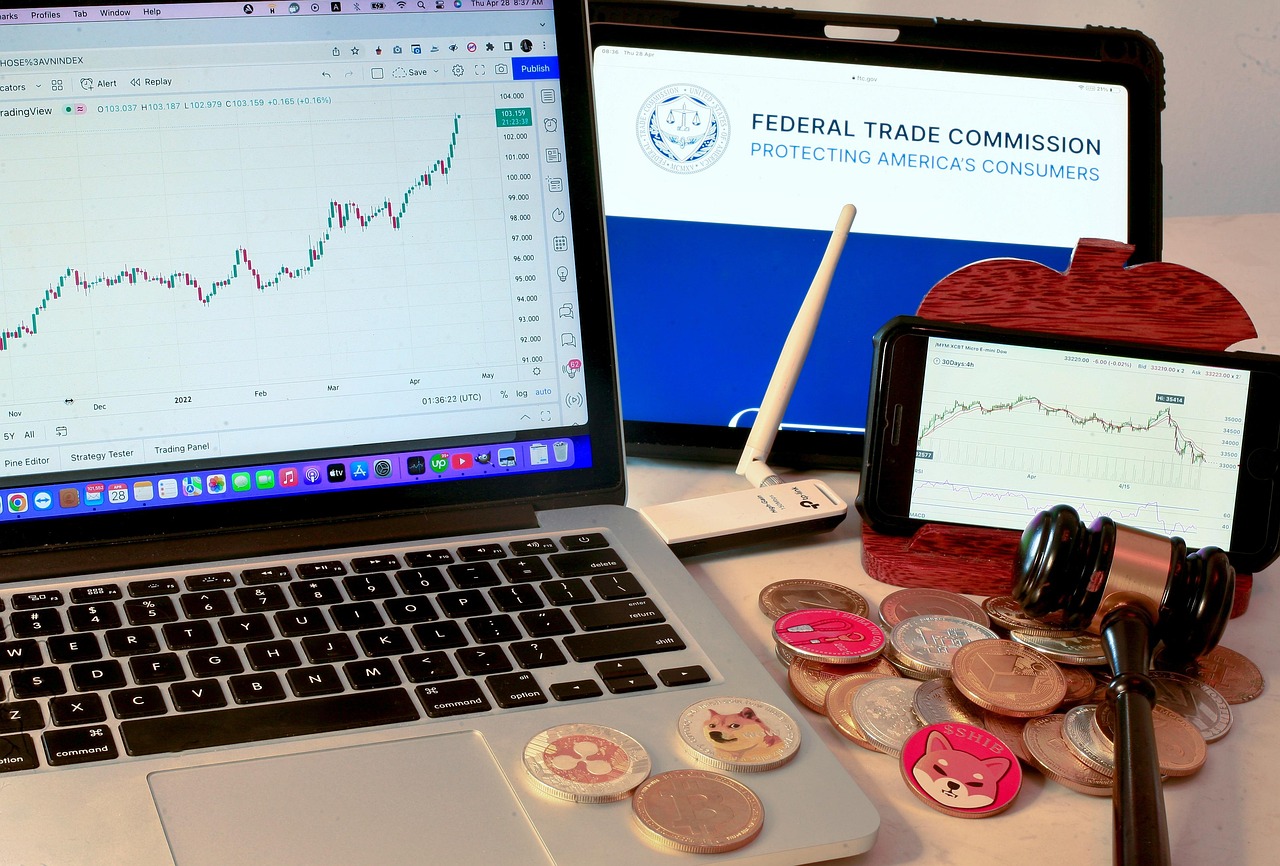
Image by Sergei Tokmakov, Esq. https://Terms.Law from Pixabay